

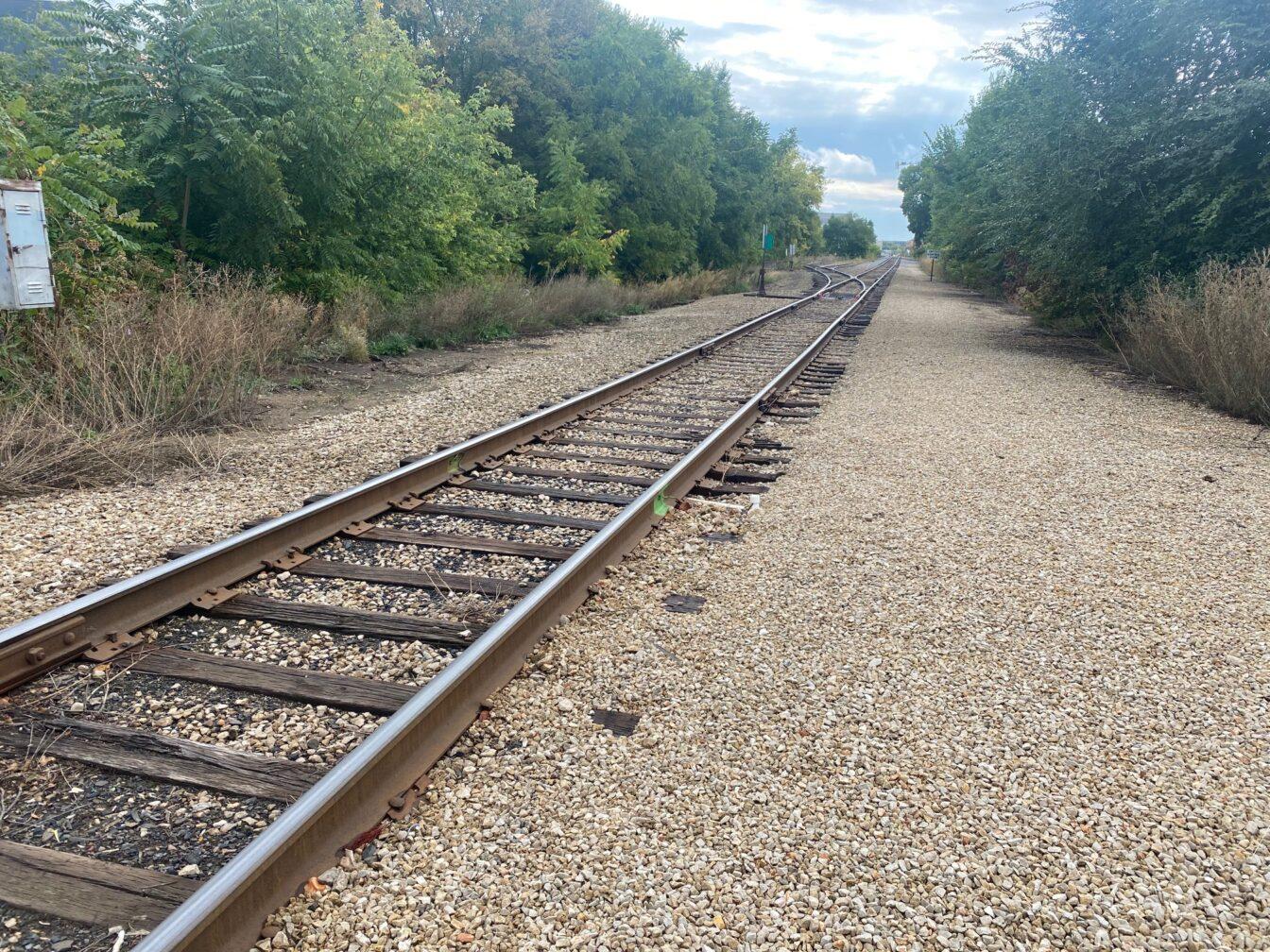

The Wisconsin Association of Railroad Passengers held a meeting titled, “New Trains for Wisconsin: How to Advocate for Them,” at Monona Terrace Oct. 25, discussing the benefits of creating new train services for Wisconsin and how students and community members can advocate for that expansion, according to the WisARP website..
WisARP board members Susan Foote-Martin and Christopher Ott shared five primary aspects of how new trains for Wisconsin would benefit the state and said trains save money, time, space, energy and lives.
“When you’re on a train, your time is yours,” Ott said. “… You can read a book, watch a movie, work or sleep.”
Additionally, WisARP invited University of Wisconsin students from the Wisconsin High Speed Transportation group to present on their organization and the advocacy they do.
WiHST is a student chapter of the American Railway Engineering and Maintenance-of-Way Association composed mostly of undergraduate students of a variety of backgrounds, according to their presentation.
Focusing on education and advocacy, WiHST hosts recruiting events introducing intercity rail to students and communicate the importance of this service for UW students.
State passenger-rail funding has cost Wisconsin passengers $7.3 million per year since 2023 and will continue that way through 2027, according to a WisARP Newsletter based on the presentation.
On the other hand, state highway projects receive more than $2 billion in funding per year, which includes federal funding, according to 2023 Wisconsin Act 19
“This does not provide enough to move fully and boldly forward with these Corridor ID projects we’ve discussed,” Ott said.
The Corridor ID program is a passenger rail planning and development project that would guide intercity passenger rail development through the country, according to the Federal Railroad Administration.
Currently Wisconsin has an AmTrak Borealis train running from Chicago to Milwaukee, and then across the state before reaching St. Paul. That rail line leaves many Wisconsin residents out, said Ott and Foote-Martin.
The session also focused on a panel inviting State Rep. Maureen McCarville, D-DeForest, State Sen. Melissa Ratcliff, D-Cottage Grove, and Environmental Law and Policy Center senior policy advocate Derrick James to speak.
The panelists touched on Wisconsin passenger rail system benefits, including convenience, economic advancements and a sense of community brought by enjoyable train experiences.
The state representative panelists at the event are both members of Wisconsin’s new Passenger Rail Caucus, which is advocating for more passenger rail service in Wisconsin, according to The Wisconsin Examiner.
Toward the end of the session, board members and panelists discussed how the caucus could appeal to the fiscally conservative who may oppose putting money toward these projects. Former Gov. Scott Walker rejected federal funding to build a fast passenger rail line in 2010.
Foote-Martin emphasized communicating return on investment, and James said he believes in the importance of communicating human stories to legislators rather than reiterating facts.
“I love trains because of what they do,” James said. “I think if we’re going to be a nation that talks about liberty, part of that liberty is the ability to move about.”