

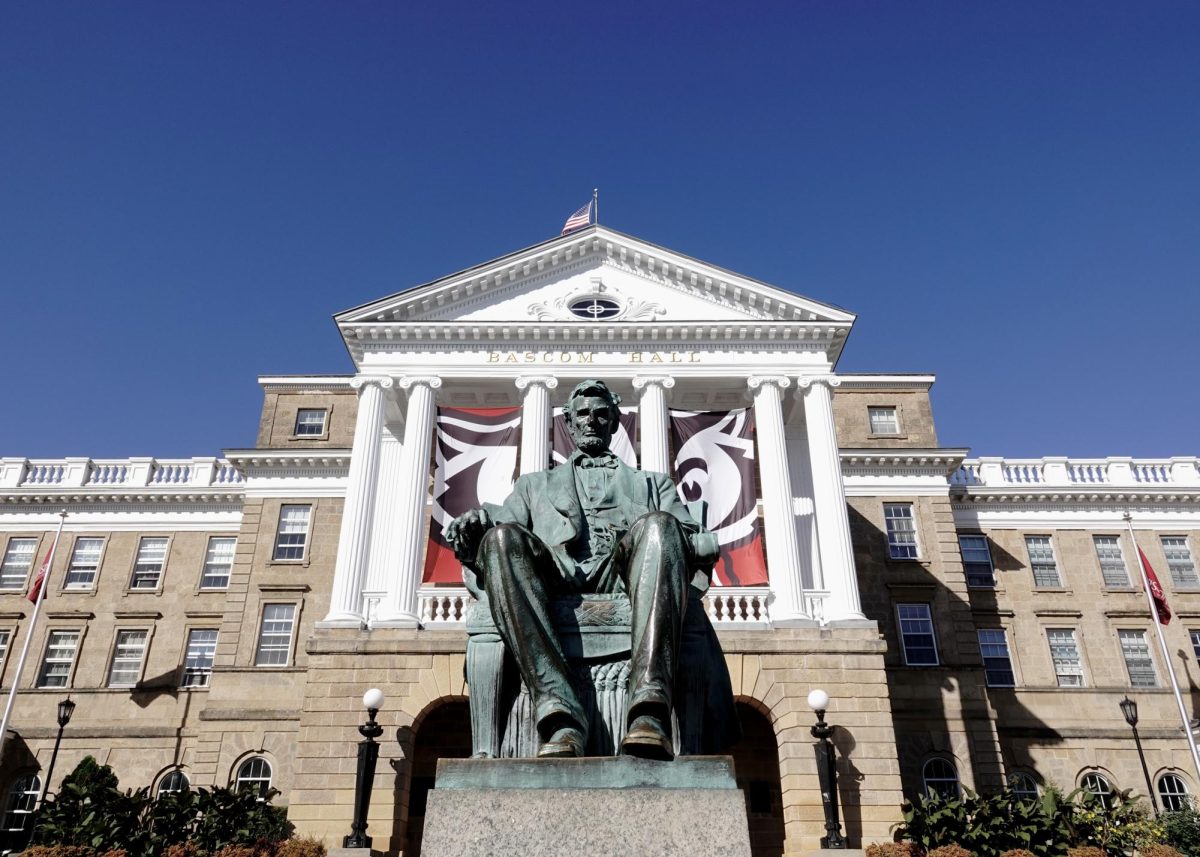

UW-Madison presented a new initiative titled “Wisconsin Exchange: Pluralism in Practice,” aiming to encourage civil dialogue and connect students, staff and faculty in a polarized world, according to UW News.
Chancellor Jennifer L. Mnookin said in a statement that learning happens best when those from different backgrounds come together and the Wisconsin Exchange will recognize that by building off existing programs and offering opportunities for open conversations, according to the Wisconsin Exchange website.
Interim Provost John Zumbrunnen also spoke on the importance of interacting with diverse perspectives in education, according to WKOW.
The launch of Wisconsin Exchange comes from university donor funding and responds to deep polarization that has transferred from the general American public to college campuses, according to UW News.
Approximately half of college students expressed disinterest in rooming with someone of differing political opinions, and even more said they would not go on a date with someone who voted differently in the 2020 election, according to a report from NBC. Around 43% of UW students statewide said they would support disinviting some speakers whose opinions could be viewed as offensive, according to a 2023 campus report.
UW Life Sciences Professor Dietram A. Scheufele said he believes in the importance of communicating across lines of difference and discussed the problems with polarization on campus.
“There’s also this effect of polarization where we hold very strong negative emotions toward people,” Sheufele said. “They’re actually not very different from us other than partisanship, they live in the same communities, they have the same jobs, they just happen to support a different candidate.”
The new efforts detailed in The Wisconsin Exchange include a series of discussions on the challenges, opportunities and expectations for the initiative. It incorporates its steering community, a postdoctoral fellowship program for those working in pluralism and a workshop with students, staff and faculty on pluralism and embracing opposing viewpoints.
Additionally, there will be a speaker series in the spring with a pluralism and civil discourse track at the 2026 UW Teaching and Learning Symposium, according to UW News.
Scheufele said he will often invite candidates from both sides of the political aisle to speak in his classroom and believes many undergraduate students are sophisticated in navigating discussions.
“I am wholeheartedly hoping that undergraduate students will be our primary focus because that is really where our major mission is when it comes to learning, and I think right now a lot of the activities are built on creating the environment that will foster that kind of behavior,” Scheufele said.
UW College Republicans are happy that the university is finally taking concerns about intellectual diversity seriously, but the Wisconsin Exchange can only be a starting point, according to an email statement from a College Republicans spokesperson. They also expressed concerns at the involvement of UW Professors Percival Matthews and Michael Wagner, according to the email statement.
“It’s democratically beneficial for people who fundamentally disagree based on values and ideology and everything else to talk to one another,” Scheufele said.