


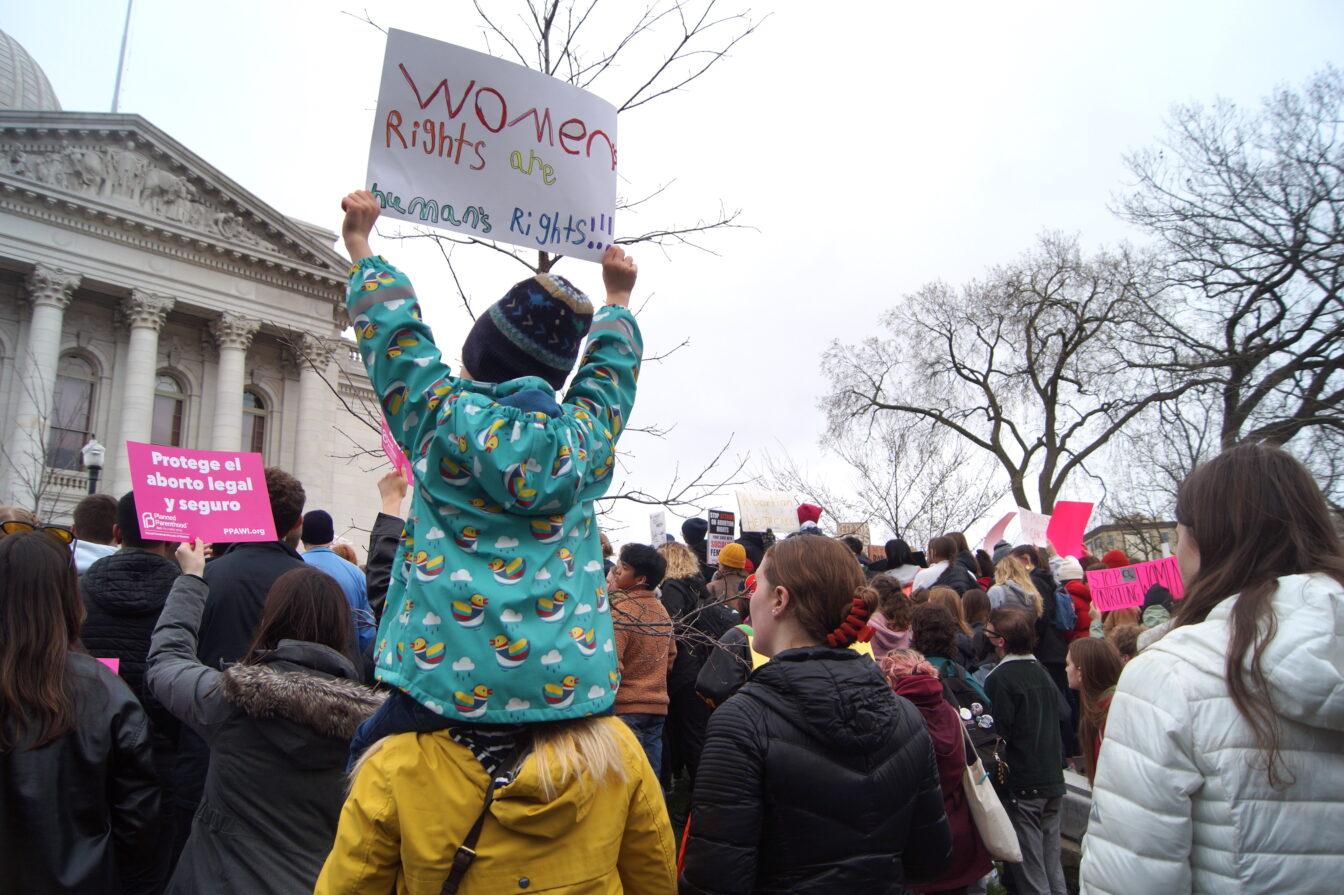

The landscape of abortion care in Wisconsin has shifted dramatically over the past couple of months. In October, Planned Parenthood of Wisconsin announced it would pause abortion services due to the Trump administration’s federal funding cuts, then, three weeks later, PPWI resumed abortion services.
Though many consider Planned Parenthood as an abortion clinic first and foremost, this is a misconception, according to PPWI Director of research, assessment and evaluation Meghan Benson.
The majority of PPWI patients come to Planned Parenthood clinics for birth control, STI testing, cancer screening and gender-affirming healthcare. Many of those patients rely on Medicaid for these services, so it was important to the organization to remain within the Medicaid system, Benson said.
“A vast majority of our patients are low income,” Benson said. “Many are below the poverty line and rely on Medicaid and other sources to cover the cost of their healthcare.”
After PPWI resumed abortion services in Wisconsin, President and CEO of PPWI Tanya Atkinson, in a press release, reiterated that the mission of PPWI is to provide compassionate, high quality care to patients even in the face of “relentless attacks.”
PPWI accounts for a significant portion of abortion care in Wisconsin. Benson said there are only five abortion clinics in Wisconsin and three of them are PPWI clinics. This amounts to only 4% of Wisconsin counties having an abortion provider, Benson said.
Even if someone is able to access abortion, Wisconsin has restrictive laws like a mandated 24-hour waiting period and state-mandated counseling, according to the Guttmacher Institute.
The 24-hour waiting period means someone has to wait 24 hours after their initial appointment to receive abortion care, which can be a huge burden on people who have to travel to the clinic, according to Benson. These types of regulations are medically unnecessary restrictions and they can decrease accessibility and stigmatize abortion, Benson said.
“[These restrictions] make people think that abortion is a much more dangerous type of healthcare than it really is,” Benson said “… Because of all these unnecessary laws, people [who come to PP] thought that abortion was scary and dangerous, when, in fact, it’s a very safe type of healthcare.”
The need to have an abortion is not limited to a single demographic of people, according to Benson. For some people, using the word abortion can feel revolutionary, while for others, it feels very stigmatizing, and they might prefer terms like “ending a pregnancy,” according to Benson. The way we talk about abortion to different communities is important, Benson said.
“You have to be really community and culturally specific when you’re talking about abortion,” Benson said.
The contemporary cultural conversations around abortion have historical context, according to teaching faculty member of the University of Wisconsin’s Department of Communication Arts Sarah Jedd. Before the Victorian Era, abortion and birth control weren’t morally separated topics but rather were seen as ways to restart a stalled menstrual cycle, Jedd said.
“There wasn’t a big differentiation between “responsible” birth control and “irresponsible” abortion,” Jedd said. “That’s more of a modern invention, but it colors how we think about abortion and birth control. We assume they’ve always been talked about like this when that’s really not the case.”
During the Victorian Era, cultural and legal opinions on morality changed, for example making pornography and contraception illegal to send through the mail, according to Jedd.
This is when birth control began to be considered a sin, with abortion considered worse, Jedd said. Though Margaret Sanger’s work in the 1950s led to increased accessibility for birth control, the current conversation around contraception still makes a distinction between birth control and abortion, according to Jedd.
There’s also a lot of misconceptions about hormonal birth control currently, according to Benson. Like any medical intervention, it carries risks, but it is generally safe and effective for most people, according to Benson.
Yet, a lot of young people are coming in with misconceptions of its dangers from social media, Benson said. She said Planned Parenthood is a great resource for finding the right contraceptive care for you.
“Anyone, regardless of their income, regardless of their insurance status, just looking for a quality provider of sexual and reproductive healthcare, we are here for them,” Benson said.
The public can find information on contraception, abortion and other sexual and reproductive health resources on PPWI’s website.
Benson also recommended UW’s Collaborative for Reproductive Equity. For those interested in the cultural conversations around abortion and Planned Parenthood, Jedd is teaching CA 315: “The Rhetoric of Reproductive Justice” at UW in Spring 2026.

