

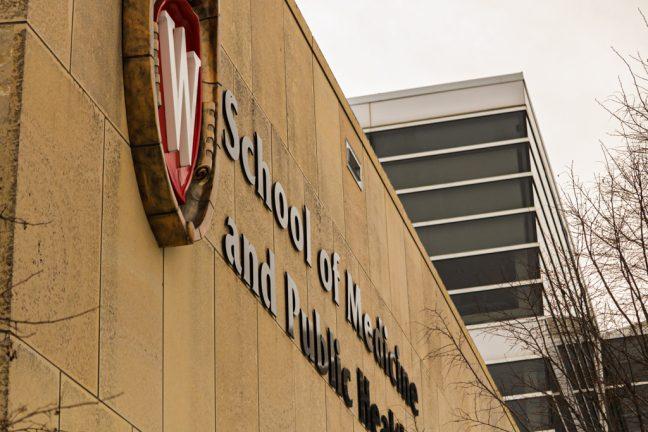

University of Wisconsin’s Carbone Cancer Center recently announced a partnership with TAE Life Sciences, a company that designs and commercializes radiation therapy to treat cancer. This partnership will provide UW’s School of Medicine and Public Health with the first accelerator-based neutron capture therapy machine in North America.
NCT is not a new technology for cancer treatment. But, NCT includes two major technological advances that are bringing renewed attention: development of clinical neutron accelerators and molecular-targeted neutron capturing drugs, UW associate professor and chair of the Department of Human Oncology Zachary Morris said.
“[We] can use accelerator technologies to generate a neutron beam, which can be placed in a hospital or clinic,” Morris said.
The accelerator-based NCT is smaller than previous therapies, allowing for patients to undergo therapy in smaller, clinical settings rather than going to a nuclear radiation facility. Also, this machine will bring stronger radiation effects compared to prior technologies as the treatment will be accompanied with patient drug use, Morris said.
NCT is accompanied by a drug delivering atoms, such as boron, that can capture neutrons and undergo nuclear fission, which releases very short range — roughly one to two cell diameters — highly potent forms of radiation. Attaching atoms on drugs that molecularly target cancer cells leverages the specificity of these drugs to target NCT radiation to cancer cells even if the cancer cells cannot be seen on a patient’s scan. Patients undergoing treatment will take the drug before each NCT treatment happens, Morris said.
“[One] can give a low dose of neutron beam radiation, but when [neutrons] hits that drug, [it’s] depositing 10 to 20 times more radiation in the tumor cells that have taken up that drug,” Morris said. “That creates an opportunity to combine a beam-based radiation with a therapeutic drug that can be activated inside the tumor to amplify the selective tumor killing effect of the radiation.”
The boron based drugs and the treatment machine, the alpha beam, are two of the things that TAE Life Sciences will provide UW, making this the first university and hospital in the U.S. to sign a memorandum with TAE Life Sciences for the NCT, chief executive officer at TAE Life Sciences Robert Hill said.
TAE Life Sciences will also provide a third thing through this partnership — support in how to build out the facility. But, UW will orchestrate the entire building process, Hill said.
“There [are] three things that are needed. One is the facility built, building the facility. The second is making the machine. The third is creating boron drugs that are used [for patients undergoing NCT,]” Hill said. “We’re engaged in all three parts.”
UW is now early in the process of creating the facilities to use NCT. Both TAE Life Sciences and UW are pushing to speed up the process of allowing this technology to be used in the U.S., Hill said.
Other parts of the world are beginning clinical trials and even treating patients with NCT. Hill said Japan approved NCT as a treatment technique for certain cancers in 2020 and clinical trials are beginning in Europe soon.
“We’ll be giving all that clinical data to the FDA and they may grant us expedited clinical trials,” Hill said.
One challenge of this new technology is trying to figure out how to best use it as there is a wide range of time frames for the treatments. NCT has the potential to make a patient’s treatment require one or two episodes of treatment, compared to some patients who could require, in rare events, upwards of 40 treatments, Morris said.
Hill said NCT is able to treat many different types of cancers and because of this TAE Life Sciences is motivated to use its partnership with UW to provide treatment for cancers that lack good treatment options.
“It’s really to give hope to patients that don’t have good treatment options today. We’re starting with the most difficult to treat cancers, the ones where patients don’t have good alternatives,” Hill said.
In addition to the patient care side of the NCT, the new technology would also foster an opportunity for UW to be a resource and innovation hub for cancer research throughout the U.S. and North America. The accessibility of NCT will facilitate development and testing of novel neutron capture drugs, Morris said.
New drugs for NCT treatment can come from repurposed drugs that currently deliver chemotherapeutics or radiopharmaceuticals. Morris said existing drugs could be used to deliver elements such as Boron or Gadolinium.
“But those types of drugs can’t readily be tested until we have a neutron source and a place to conduct clinical trials,” Morris said.
The timeline to achieving the goals of the partnership, which is helping patients through a clinical trial, isn’t likely to take place until early 2028, despite UW being the first place to get NCT, Hill said.
With the agreement between TAE Life Sciences and UW recently becoming official, the university and Wisconsin state government now control the process of building the facility. The facility will be built in the UW hospital complex and will house the NCT machine, Hill said. Once construction is complete, the machine takes approximately six more months to be installed and then a clinical trial could begin.
The target to get approval to start using this therapy for patients after the clinical trials are complete is three to four years, Hill said.