


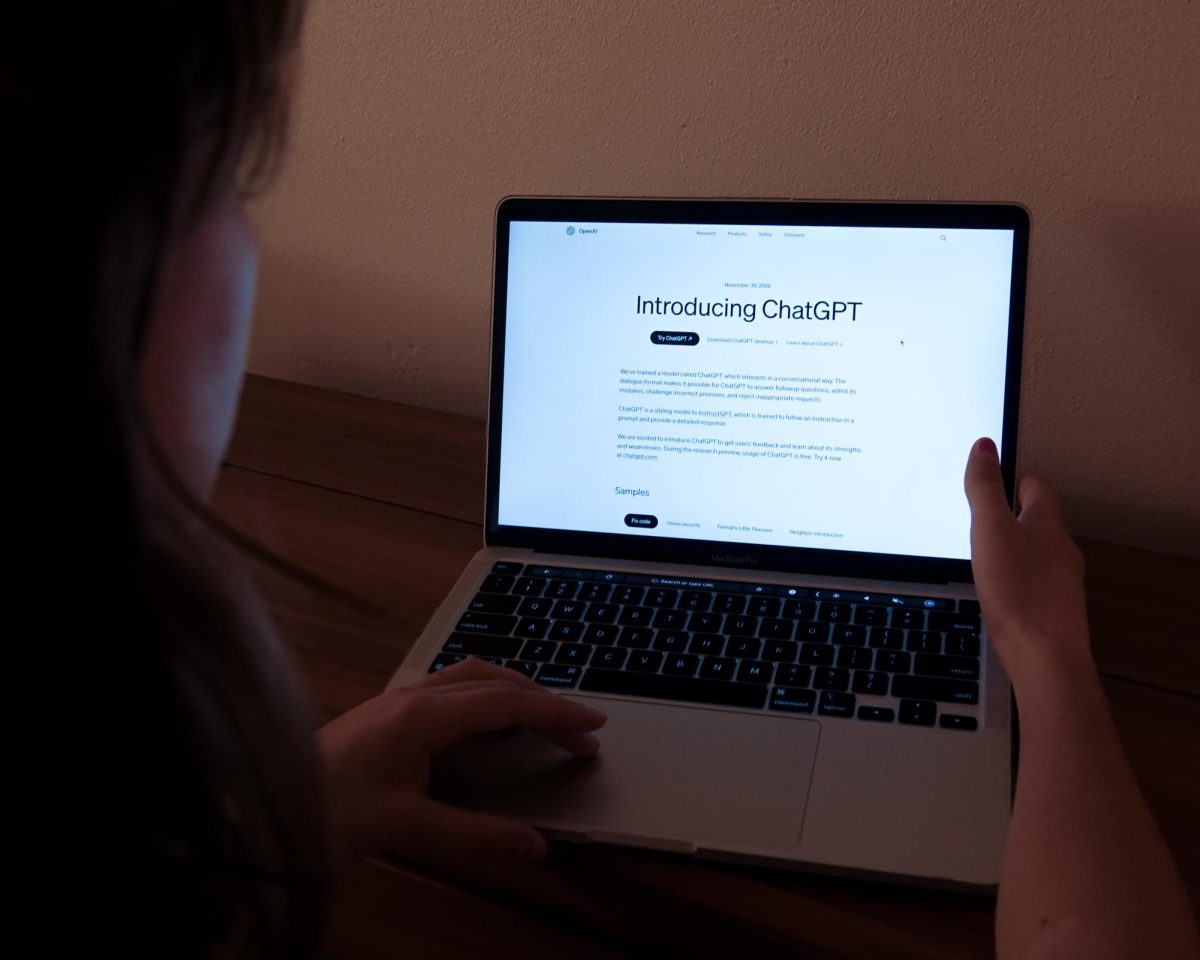

Small towns across Wisconsin have been brought to the forefront as large technology companies, such as Microsoft and OpenAI, look to them amidst the rise of AI data centers. There are currently 47 data centers in Wisconsin, according to Wisconsin Data Centers.
Almost as quickly as these data centers have been planned and facilitated, the fight against them has risen, bringing communities together. In Deforest, community members have shown up in droves to fight against a potential data center proposed by QTS Data Centers.
About two hours from Madison in Port Washington Wisconsin, residents discuss the construction of a multi-building data center campus created through a deal with OpenAI, Oracle and Vantage Data Centers.
The campus, set to be finished in 2028, will have four data centers and take up 672 acres, according to Vantage Data Centers. Town hall meetings have become an epicenter for debates surrounding the construction of the future data center campus.
Discrepancy in information such as the cost to residents, how the deal was created and the reality of potential benefits were focal points of the town meeting, which took place Nov. 18.
Vantage knew how to close this deal, move fast, publicly shared as little information as possible and it did political deals in the dark, rural Port Washington resident Mike Jenson said.
“If big tech cared about this community they would have structured a community benefit agreement that provides funding for Port Washington and Saukville schools, funding for the $30 million municipal building and agreement to fund the varied power lines to protect rural landscape,” Jenson said.
Despite growing community concerns and dissent the Port Washington city council voted unanimously to pass a tax incremental finance district or TID. The TID would essentially reimburse Vantage for the $175 million in infrastructure costs needed to make the city compatible with the data center campus, according to WPR.
As the council continues to hurl through approval processes and billion dollar deals, residents seek more effective ways for their voice to be heard. A petition to block the approval of a TID over $10 million without referendum, gained over 1,000 signatures in its first week, Jonathan Rizk, a participant at the November meeting, said.
“I would like for them to give us a little bit of a voice in the way that this project is done, specifically in regard to the TID,” resident of Port Washington since 2012 Mike Beaster said. “I think it is shameful that a $15 billion project done on a city that has an annual tax levy of $10 million was not put to referendum.”
Members of the citizen coalition, Great Lakes Neighbors United, attended the meeting with the purpose of continuing to press the council away from the project, according to an attorney based in Shorewood Wisconsin Joseph Cincotta, who represented the group.
On behalf of the group Cincotta filed an objection to the TID, which despite its rejection will continue to work on. While on stand Cincotta discussed the connection and loyalty citizens have to the community and city at large.
These data centers raise concerns with a broad range of citizens — property owners, farmers, business owners and people with environmental concerns, Cincotta said.
“These folks have lived here and shown their loyalty and commitment to the community, they pay their taxes in full, and they do that every day,” Cincotta said. “Their care and concern for the city is obvious.”
Resident concerns went beyond economics, ranging from sustainability to the dangers of AI for children. They are also concerned that the council is not understanding the implication of the data center beyond what Vantage is doing.
A candidate for the 5th congressional district, in which Port Washington resides, Amanda Bell spoke at the meeting. Bell, who was a hydrologist for the U.S. geological survey for 25 years, focused on what she saw as a lack of research done regarding environmental impacts.
The heat exchange from data center operation will be detrimental to the fish and fisheries in Lake Michigan, which would then affect the fishing and tourism economy in the state, Bell said.
“Those [economic] benefits are short lived, unfortunately these environmental impacts will have long term effects,” Bell said. “As a scientist I look for sources in multiple areas, I look for peer reviewed facts based sources, not just what the company that wants to build is doing.”
Beyond the physical data center and its implications, residents voiced concerns about the proliferation of AI, its dangers to the public with many focusing on harms to children.
Roxanne Ramirez of Winter Spring Farms questioned the lack of assessment surrounding the use of AI, noting a lack of understanding around which jobs “make sense” to utilize AI.
“This is an unregulated industry that is being exploited by pedophiles and people who seek to harm children,” Ramirez said. “… Is it technology that is appropriate, is it technology that is safe for consumption by the public?”
Ramirez said there have been casualties that have been glossed over as collateral damage.
Former math teacher for Port Washington school district Morene Janter, called for the city council to “do their homework” and slow down and rethink the process. The council should learn to do their own research and take time to understand what they are doing, Janter said.
AI has been shown to have negative effects on the ability for children to learn, as over reliance on AI can create technostress and lead to social isolation and anxiety, according to an article published in PubMed. If AI is going to be added safely into classrooms it must be done with attention, according to the article.
“I fear for the children of the whole county, I think there needs to be a huge discussion of what needs to be taught to children,” Janter said. “Students need to be taught skills, the ability to think, to read and to research, and AI should not replace that. Learning is not accumulating knowledge — it is more than that.”
Out of an hour of public comment, a single resident spoke in support of the data center campus. Representing the Ozaukee Economic Development board, Kathleen Cady Schilling discussed the potential economic benefits to Ozaukee County provided by the project.
“We are excited to see Vantage become a community business here,” Schilling said. “Vantage recently held a meeting with local businesses here about how they could get involved with this project.”
This is a developing story.
Port Washington Mayor Ted Neitzke agreed to an interview with The Badger Herald, but he left the meeting shortly after its end and has not responded to further requests. The rest of the council declined to interview.

