


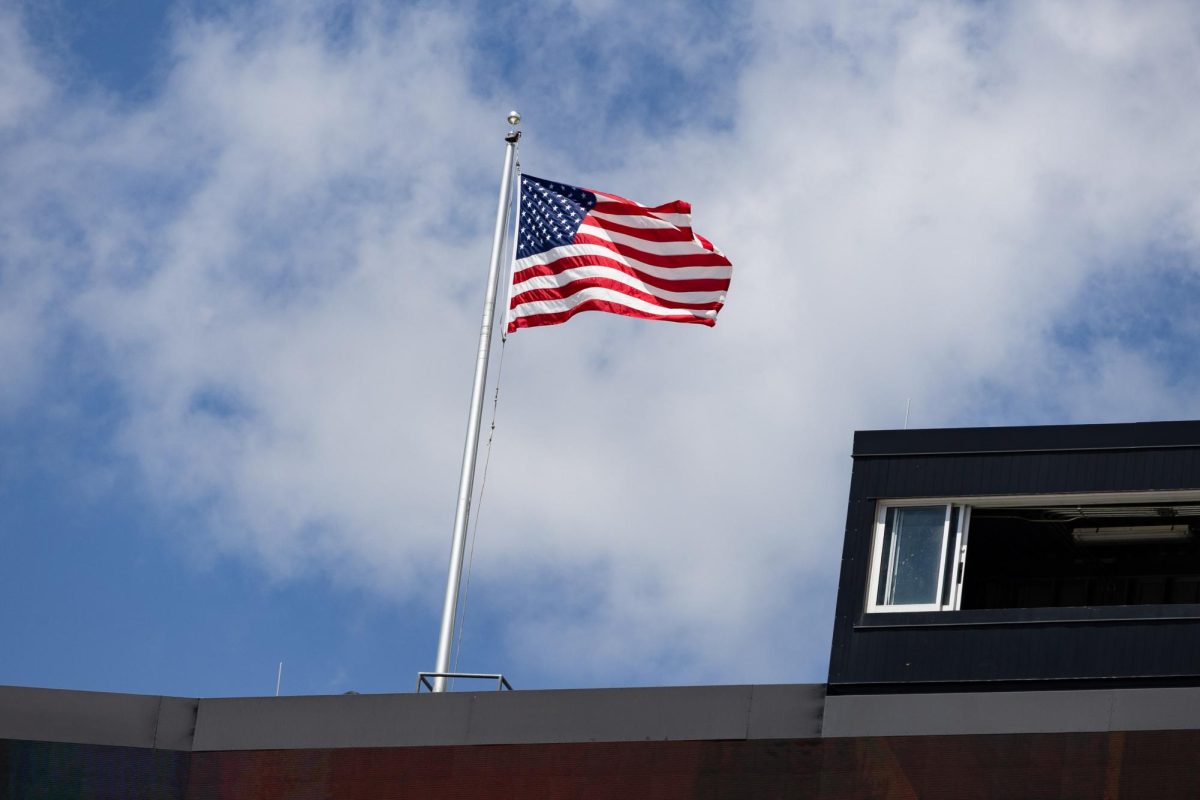

This Fourth of July marked the 250th anniversary of the United States. While celebrations of the U.S. have always been complicated, the Trump administration’s impact on national events illustrates the impact of polarization and a for-profit outlook on commemorating a nation that was designed to represent the many, not the few.
The Trump administration used Freedom 250, a public-private partnership created via executive order last year, to circumvent the nonpartisan goals of the original semiquincentennial celebration group, America 250, which Congress created in 2016, according to National Public Radio (NPR).
Freedom 250 operates under the National Parks Service, a branch of the federal government where Trump loyalists are in control. When Trump could not pack America 250 with allies, his administration shifted to this new organization that was responsible for creating and hosting national celebrations. Many of the events brushed over the difficult points in American history and contained Christian undertones, according to NPR.
Freedom 250 is supported by companies including Palantir, Lockheed Martin and Oracle, which hold valuable lobbying positions for Trump supported policies, like expansions of data centers and military technology, according to CNN.
While conservatives have framed the celebrations as purely patriotic, the impact of corporations cannot be ignored. In response to Freedom 250 and the politicization of the holiday, House Democrats released a 55-page report titled “From Vanity to Insanity: How the White House Cheated the American People out of their 250th Birthday.” The report details the partisan influence on the events and the legal implications, including potential reports of donor fraud.
The report’s authors accuse the event of becoming a “hotbed of corruption and self enrichment” and argue that holding the Trump administration accountable is itself a patriotic act, according to the report.
In a time of high levels of political polarization and declining trust of fellow Americans, Trump used a nonpartisan celebration to pander to the hateful rhetoric that has become commonplace in current politics. The Freedom 250 events reflect the Trump administration’s primary message: patriotism is reserved for conservatives and the ultrawealthy.
In a speech at the site of Mount Rushmore on July 4, Trump quickly pivoted from patriotic statements of American exceptionalism to overt political messaging unprecedented for high profile Fourth of July presidential speeches. It included fearmongering about the threat of communism to Trump’s America, and was presented more as a political rally speech than a presidential address, according to NPR.
Beyond the Natural Resources Committee Democratic report, other organizations tried to counter Trump’s politicization of the anniversary. Next 250 is a left-leaning counterpart that hopes to celebrate the 250th anniversary with nonpartisan messaging that emphasizes the strength and importance of American democracy, according to CNN. The organization also focuses on open discussions and acknowledgements of the painful points in American history, including slavery and the treatment of Native Americans, according to CNN.
Organizations and individuals countering Freedom 250’s messaging emphasized that celebrating America means celebrating its foundation as a land for all people regardless of party affiliation, according to CNN.
But for many, even this sentiment evokes complicated emotions. Many struggle to determine how to celebrate certain aspects of America while making it clear they do not support the current government or the repeated failures of the country’s promises of equality and justice for all.
In an April survey, about 4 in 10 U.S. adults feel “proud” about the country’s 250th anniversary and about 3 in 10 are “excited” about it, according to The Associated Press-NORC Center for Public Affairs Research.
Lack of pride in the country’s anniversary may, in part, reflect the Trump administration’s approach to the celebration, as well as uncertainty about one’s role as an American in the current political climate. While there are a plethora of reasons why this lack of excitement is understandable, shifting the narrative around patriotism could inspire action in support of a more equal America.
To counteract the national level issues, many turned to local celebrations and community organizations to remind themselves of what America offers beyond the Trump administration’s skewed view of national achievement. Taking an active role in one’s community is crucial for moving beyond prejudices and polarization, seeing the humanity in each other and forming connections.
Fourth of July has always contained political undertones, but the holiday became dominated by conservative messaging. Rather than rejecting patriotism as something reserved for the right, those on the left should reclaim the holiday as a reminder of the importance of democracy and freedom, even as the Republican government tries to subvert these rights.
An inherent part of loving America is acknowledging its wrongdoings and believing in what it can become. Thus, resisting the definition of patriotism championed by those who wish to return to the past, or “Make America Great Again,” and instead embracing the potential of a better future for all Americans, can ultimately empower true change.

