


CONTENT WARNING: Discussion of suicide and/or self-harm. If you are experiencing thoughts of suicide or self-harm, dial 988 to reach the Suicide & Crisis Lifeline. View options for mental health services on campus through University Health Services.
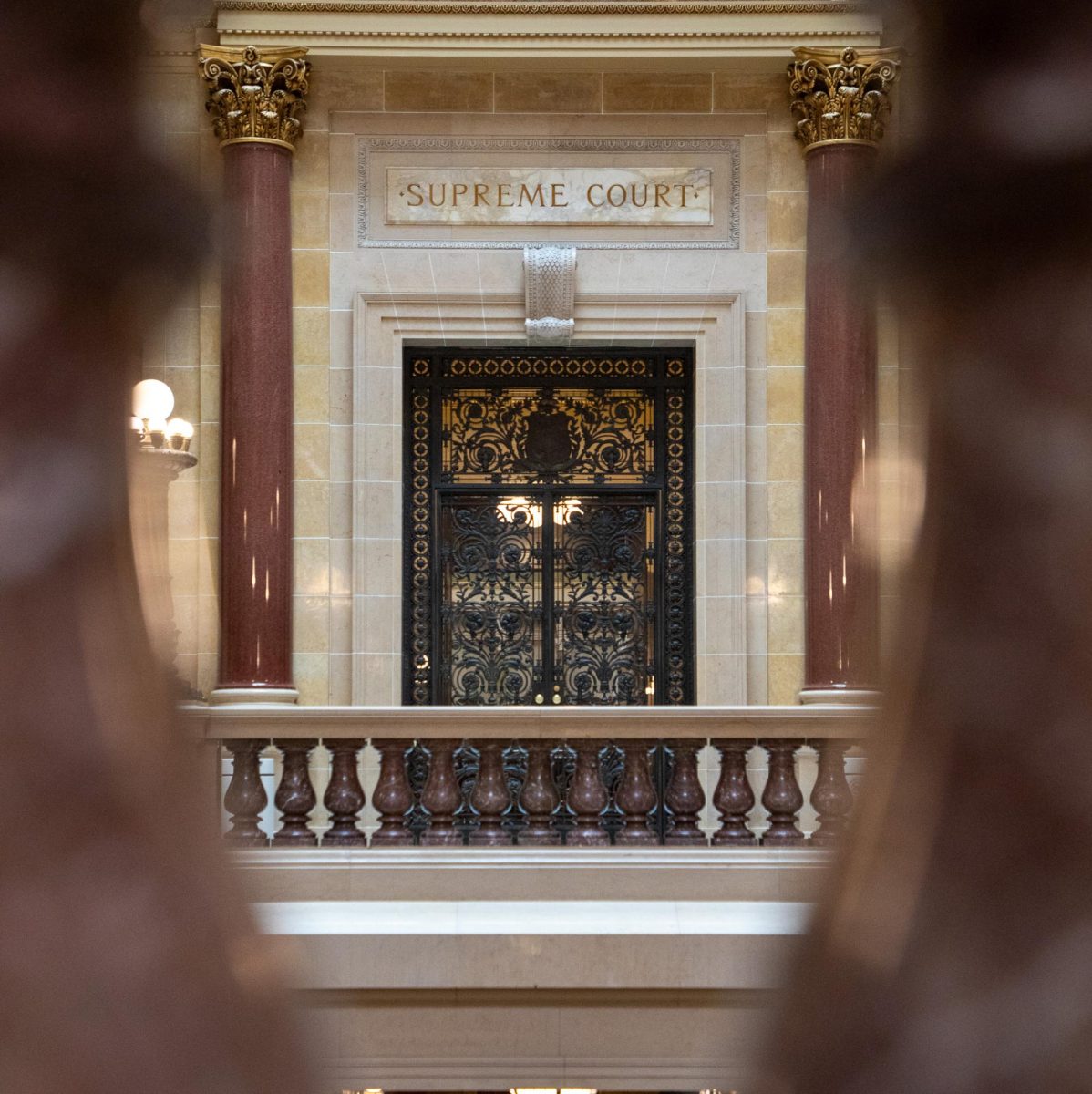
The Wisconsin Supreme Court heard arguments Jan. 16 over whether or not the State Legislature can use its authority to block rules proposed by state agencies — specifically concerning a ban on conversion therapy introduced by the Wisconsin Department of Safety and Professional Services, according to the Associated Press.
The Legislature argues that since it gave state agencies the authority to introduce rules in the first place it should also be able to suspend this authority as it deems appropriate, according to Wisconsin Institute for Law and Liberty General Counsel and President Rick Esenberg.
“The question becomes ‘how do you prevent … a situation where the administrative agencies have usurped the legislative role, where they’ve become the legislators?’” Esenberg said.
Esenberg said he believes it is an abdication of legislative authority for the Legislature to allow a state agency to rule on this issue.
Esenberg said certain agencies should maintain authority in aiding the Legislature — such as environmental agencies that help determine acceptable levels of pollutants, but he said issues of conversion therapy do not fall under the same jurisdiction.
“The people elected the legislators to solve these problems,” Esenberg said. “They didn’t elect the bureaucracy.”
State agencies argue that the Legislature should not be able to rebuke their authority unless a law to do so is passed by both the State Senate and Assembly and then signed by the governor, Esenberg said.
Executive Director of the Wisconsin Chapter of the National Association of Social Workers Marc Herstand said that state agencies should be allowed to introduce rules regarding their specialty.
“I’ve been working on this for seven years, and it is our hope that the Supreme Court will rule in our favor,” Herstand said.
The ban would not block religious providers from practicing conversion therapy on their clients, Herstand said.
The U.S. Court of Appeals for the 9th Circuit ruled that these bans do not bar spiritual providers or mental health professionals from discussing their opinions or recommending treatment. Instead, the bans are geared toward regulating medical professionals, according to a Congressional Research Service report.
Esenberg said he is concerned about the ban infringing on First Amendment rights if it limits what a therapist can say to a patient.
“Depending upon what the rule [ban] says, we would be opposed to it,” Esenberg said. “Particularly if this rule is basically trying to impose a particular orthodoxy … [such as] you can’t tell somebody or ask them whether or not they would prefer to be … their birth sex.”
WILL previously argued against the City of Eau Claire’s ban on conversion therapy, saying the ban discriminated against certain viewpoints and violated the First Amendment, according to Wisconsin Public Radio. As of recently, Eau Claire, Milwaukee, Madison and several other Wisconsin cities continue to observe bans against conversion therapy, according to WPR.
Herstand said conversion therapy should be banned given the dangerous effects it can have on LGBTQ+ individuals and he said there is zero concrete evidence to show conversion therapy is effective for changing sexual orientation.
Researchers at Cornell University conducted 47 studies on whether or not conversion therapy can alter sexual orientation without causing harm. In 12 of the studies conversion therapy was either ineffective or harmful, one study found it to be effective and the rest of the studies were inconclusive, according to the Cornell website.
Herstand said studies have shown conversion therapy to have especially detrimental mental health effects on young people in the LGBTQ+ community.
“It’s [conversion therapy] been associated with increased depression, psychological distress … suicide attempts as well as lower educational achievements, lower weekly incomes,” Herstand said. “So it has a terrible impact on LGBTQ youth who go through it.”
Esenberg said he believes a therapist should be able to help someone who is experiencing gender dysphoria by working with that individual to accept their birth gender.
But Herstand said most LGBTQ+ individuals are sent to conversion therapy by their parents who cannot accept their children’s identity. Children are rarely distressed about their sexual orientation, according to the Substance Abuse and Mental Health Services Administration.
Herstand said he hopes the ban will pass and that it will make the dangers of conversion therapy more well-known.
“Engaging in conversion therapy by mental health professionals is completely unprofessional conduct and subject to discipline,” Herstand said.
The Wisconsin Supreme Court will rule on this issue in the coming months, according to the AP.
Resources regarding suicide prevention and mental health:
- 988 Suicide & Crisis Lifeline: 988 https://988lifeline.org/help-yourself/loss-survivors/
- Crisis Text line: Text HOME to 741741 https://www.crisistextline.org/
- Trevor Lifeline crisis intervention and suicide prevention services to lesbian, gay, bisexual, transgender, queer and questioning (LGBTQ+) young people: https://www.thetrevorproject.org/get-help/
- UHS 24/7 crisis support 608-265-5600 (option 9)
- UHS suicide prevention resources: https://www.uhs.wisc.edu/prevention/suicide-prevention/