

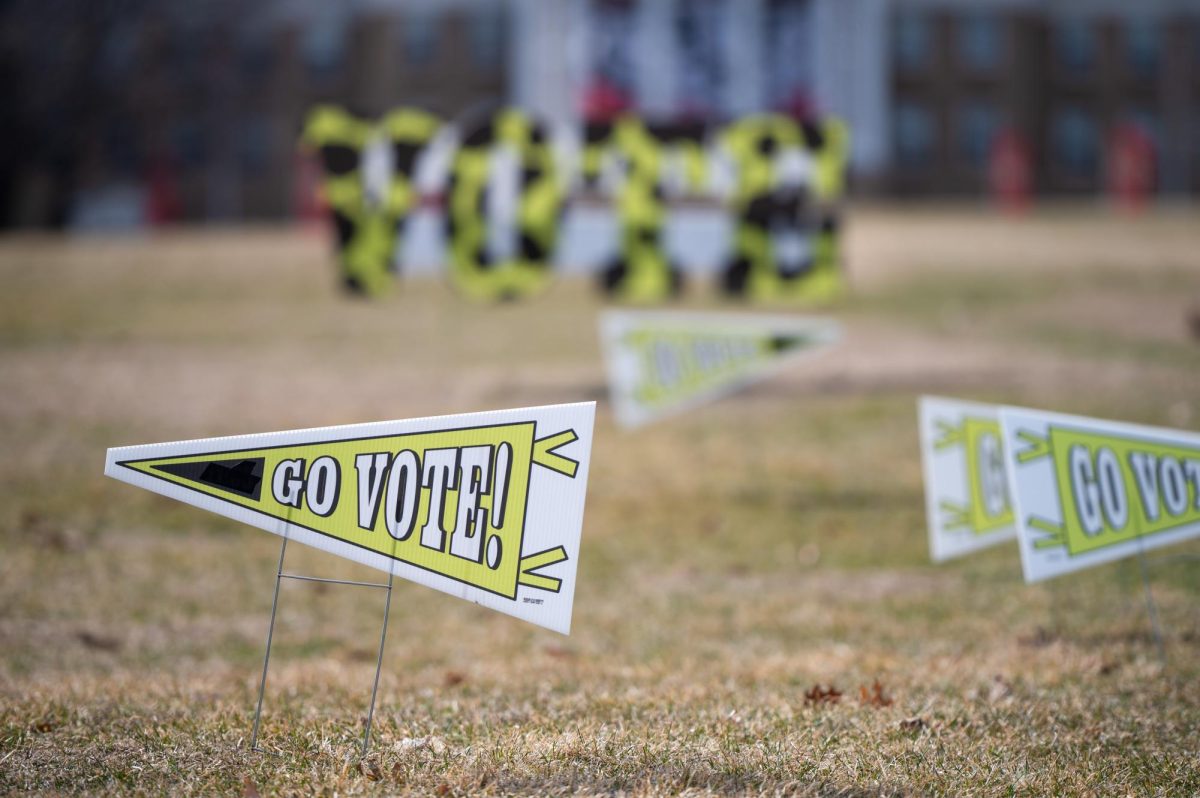

A University of Wisconsin study on voter suppression revealed that disinformation organizations used social media ads to suppress voting in nonwhite communities primarily in battleground states like Wisconsin, according to UW News. This is worrisome for the integrity of free and fair elections.
Researchers studied the 2016 presidential election by monitoring the ads seen by 10,000 people across the U.S. Participants installed an app that monitored ads seen for six weeks leading up to the election. Those who saw voter-suppressing ads on Facebook were 1.6% less likely to vote than those who did not see targeted ads, according to UW News.
The ads used a variety of anti-voting messaging to reach the social media users, but the most common tactic was stating that not voting would send a stronger message to those in power. The advertisers used Facebook’s microtargeting to identify nonwhite users in Wisconsin. These users were four times more likely to see vote suppressing messaging than their white neighbors, according to UW News.
While the margin of difference made by the ads is small, it is representative of the small margins of victory common in battleground states. The researchers estimate that the ads stopped as many as 4.7 million people from voting across the country, according to UW News.
Lead researcher and professor at the UW School of Journalism and Mass Communication Young Mie Kim said that the ads exasperated nonwhite communities’ previously held sense of distrust of the government. She considers this to be a digital version of historical voter suppression strategies in the U.S.
Voter suppression has taken many forms throughout the history of voting in the U.S. as it moved from Jim Crow laws such as poll taxes and literacy tests that unfairly targeted black voters to issues that persist in the present such as voter ID laws, attacks on early and mail in voting, access to polling places and gerrymandering, according to ABC News.
Thus, digital age voter suppression is not a novel concept, but one that contains layers of secrecy and invasion into daily life that were not present in earlier suppression attempts.
This is clear through the studied ads, as they were purchased and distributed by a Russian disinformation operation called the Internet Research Agency. The agency did not disclose information about the messaging to the Federal Election Commission, making it unclear to voters why they were receiving these ads and what ulterior motives the company had, according to UW News.
Because of this lack of clear understanding, the researchers call for further federal regulations that would make the sources of the ads more clear to voters to cause viewers to critically consider the accuracy and motives of the ads, according to UW News.
Emphasizing transparency in advertising is important for elections as voters should know who is pushing certain messaging towards them and why they are doing that. But, further federal regulation and transparency should not be our only steps to reduce advertising disinformation on social media.
An aspect of voter suppression in the digital age that was not addressed in the study but is crucial to understanding voting trends is the power of influencers and social media content to impact polarization and voter suppression.
A 2023 study showed that influencers who push disinformation, whether knowingly or not, contribute to the disconnect between politicians and voters. While politicians push to moderate their stances to reach independent or undecided voters, social media users are fed content intended to push them to the extremes of their party beliefs because content creators use extremism to establish a viewer base, according to Penn State.
The issue of misinformation is worsened by the fact that 40% of voters ages 18-29 say that social media is their primary source of news. Social media is a unique landscape because, unlike legacy media such as cable television, people from both sides of the isle largely use the same platforms but have vastly different experiences, according to Brookings.
People in the same demographic group could see radically different content than their neighbors simply based on algorithms that are intended to enhance extreme beliefs. This opens up ways for malicious actors, such as those targeting nonwhite communities in the study, to reach certain communities while going unnoticed by everyone else.
Extremely personalized social media feeds not only keep us in an echo chamber of our own beliefs, but they reduce the ability of those intending to provide accurate information to reach the masses.
While regulating advertising companies as well as the social media platforms themselves to enhance transparency will have an important impact, we cannot rely on the federal government and large corporations to be the sole actors reducing disinformation. This issue requires an organized effort by social media users to stay vigilant when viewing ads and openly question content that seems dishonest.
Further voter education will also be necessary to reduce voter suppression through social media. By educating both students and voting adults about proper social media use, communities can resist the literacy crisis that has come to define digital spaces in recent years. This can be done online through transparent accounts with the sole goal of information sharing.
Thus, a collective effort through legal and community action will be required to counter the actors intent on harming elections through increasingly subtle and deceptive means.
