


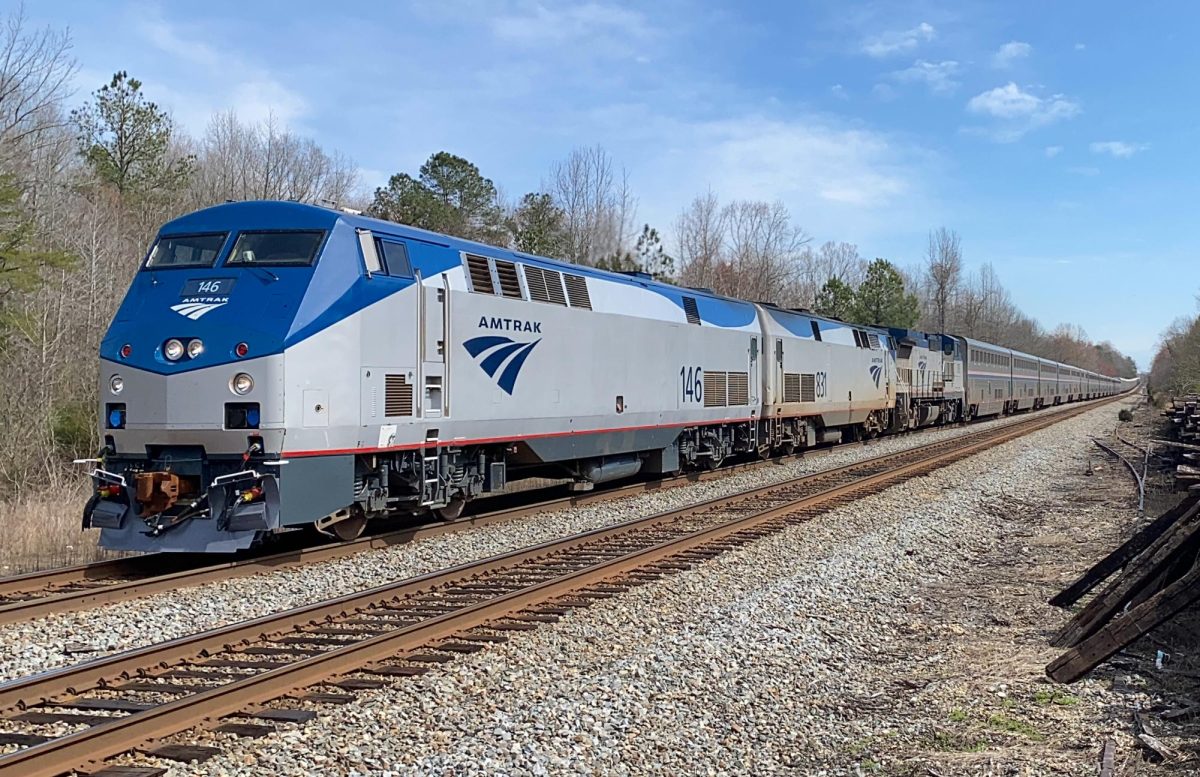

Madison will once again consider building an Amtrak route that would connect Madison to Milwaukee and Minneapolis, but the project remains under the same politicized debates that halted construction progress 15 years ago, according to the Cap Times.
A 2023 federal grant allocated $500,000 to studying the feasibility of this route as part of Biden’s bipartisan infrastructure bill. It would be years before the station would open, as plans currently stretch into 2032. The scope of the project was established through federal funding, but future aspects of the project will require local funding as well, according to the Cap Times.
High-speed rail and general passenger rail have a long history in Wisconsin. Beginning in 1999, Republican Governor Tommy Thompson and then Democratic Governor Jim Doyle worked to create a plan for passenger rail in Wisconsin through Thompson’s “Midwest Rail Initiative.” In 2009, during the Obama administration, Transportation Secretary Ray Lahood chose Wisconsin to receive federal funding for developing rail because a plan was already developed, according to Wisconsin Public Radio.
Passenger rail was a strategy for the U.S. to recover from the 2007 recession because it could create jobs and generate revenue from a large passenger base as Amtrak is government owned, according to the Cap Times.
Despite these benefits, Republican gubernatorial candidate Scott Walker politicized the issue despite previous bipartisan support. Walker ran his campaign on stopping the rail project. He called it a “boondoggle” and believed the money would be better spent on highway infrastructure, according to WPR.
Walker, the “talk radio” candidate, used radio to spread his government spending message to small towns in the state, but politics truly dominated Walker’s reasoning. While telling rural voters rail would disadvantage them, he worked hard to send a message of renewed conservatism to an Obama-led federal government, according to WPR.
When Walker was elected in 2010, he blocked the entire $800 million dollar federally funded project and the money was redistributed to other states, leaving Wisconsinites without a service that once felt like an established point of progress, according to the Cap Times.
Prior to Walker, the project was not nearly as controversial. Since his extreme conservative views became popular across the state, the possibility of high speed rail in Wisconsin is often dismissed by state leadership as a left-wing pipe dream.
However, rail infrastructure projects should not be politicized. While arguments around the obstacles facing high speed rail generally revolve around economic and ridership concerns, the underlying issue facing passenger rail progress is the prominence of American individualism in car culture, according to the Cap Times.
The strength of automobile and freight industry lobbyists also halts progress. While passenger trains should be prioritized over freight lines through federal law, freight lines continue to dominate the railways, as Amtrak must rent rail lines from railroad companies, according to the Cap Times.
Walker played into rural Wisconsinites’ car dependency in 2010, claiming the state “does not need” to spend the money on the project, according to WPR. Republican leadership is likely to use similar talking points today, so Democrats must work to form a broad coalition to return the state to widespread support for rail projects.
While focusing on environmental and travel safety benefits may work to reach urban populations and Democrats, we must take a different approach to reach rural communities. By bringing rural communities into the conversation about rail, we can push back on the belief that rail will leave them behind.
Currently, the route connecting Chicago to Minneapolis stops in Columbus, Wisconsin, a town of 5,000 people near Madison. The route also stops in other small communities in the state, providing them with a connection to these large cities, according to the Cap Times.
Thus, expanding rail to Madison will allow those living in cities without vehicles to visit small towns, which would increase tourism and local business spending. The routes will allow those in smaller communities to access entertainment such as sports and concerts in larger cities without concerns about traffic or parking.
For University of Wisconsin students from rural communities, this will provide a more efficient way to travel home for breaks and weekends, as well as providing an opportunity for out-of-state students to explore the surrounding areas without needing to own a car.
Focusing on these positives for small communities may not immediately cause rural voters to support expanding rail in Wisconsin, however, by focusing on nonpartisan benefits, proponents of rail can reach those disillusioned with the intense political polarization of today. Instead of branding the project as a progressive issue, proponents should focus on its value in connecting the state.
The timeline of the project may discourage some, as it would not open for close to ten years, but had this project been completed when discussion began in the 2000s, young Wisconsinites would not know the state without advanced passenger rail, according to WPR.
This issue is particularly frustrating knowing that it could have passed without controversy if not for extremists looking to pit Wisconsin’s urban and rural populations against each other by framing the issue as an urban left wing luxury rather than a service that will help all residents. Wisconsinites, including students, need to support this project despite its timeline because we must provide for future students what the generation before us could not.
