


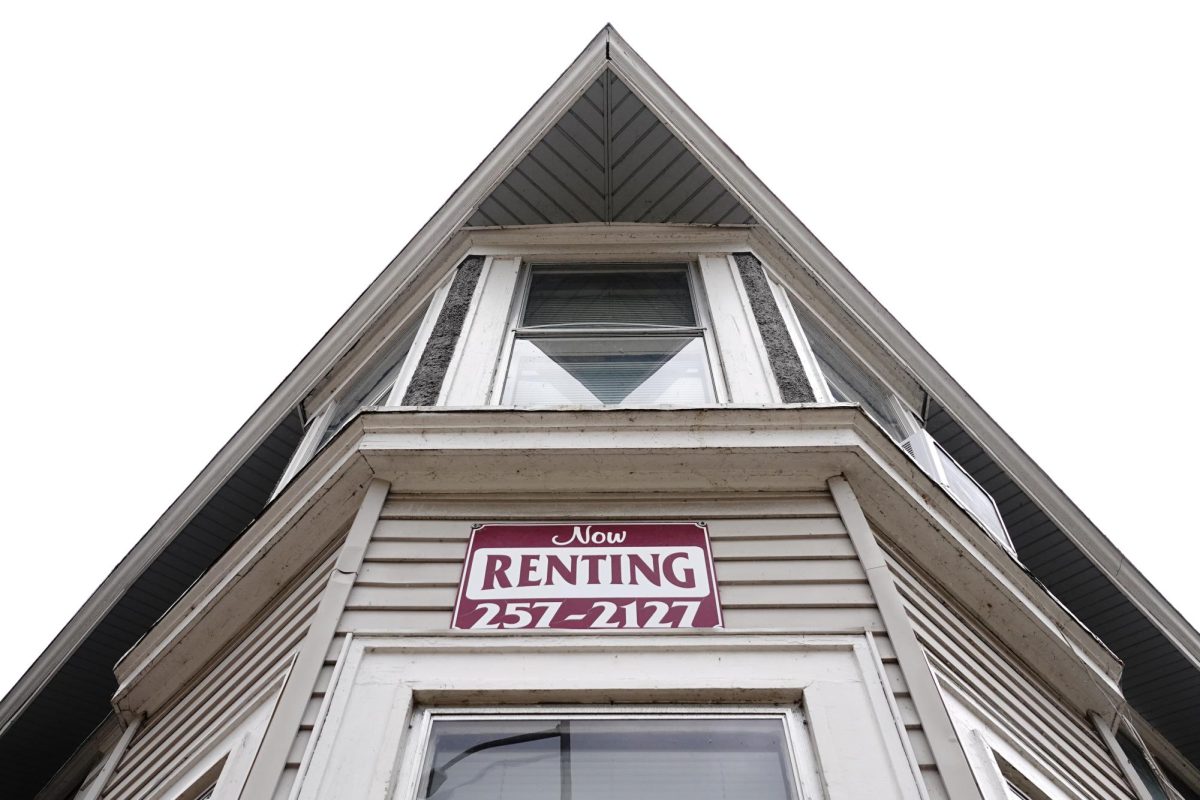

City of Madison alders unanimously approved the latest set of Housing Forward proposals Oct. 7, according to the City of Madison. In addition to the proposals approved by the Common Council in the summer, these proposals eased the process of building various housing projects throughout Madison, according to the City of Madison.
Housing Forward is a city initiative launched in 2021 to build 15,000 new homes by 2030, with 25% of those new homes being affordable for people earning 60% or less of the area’s median income, according to the City of Madison.
City Council Vice President and District 8 Alder MGR Govindarajan, who represents the campus area, discussed the three latest approved proposals.
“To address the housing crisis in Madison, you have to tackle it from various sides,” Govindarajan said.
The first proposal involves clarifying height transition requirements in the city, Govindarajan said. Height transition requirements determine how tall a building can be next to a residential building, and this proposal makes the requirements less restrictive.
The second proposal made adjustments to the lot area, lot width, alleys and garages, Govindarajan said. The third proposal allows up to two Accessory Dwelling Units, also called “backyard cottages,” Govindarajan said.
The proposal addressing height changes will impact students the most because downtown Madison is where height limits are typically enforced, Govindarajan said. Adjustments to lot areas and backyard cottages are more relevant to suburban parts of Madison, he said.
Previously built, small residential houses have a smaller height limit, so larger apartment buildings needed to match the existing houses, Govindarajan said. This requirement was removed, allowing buildings to reach the maximum height limit, as a result of the first proposal.
This proposal allows more apartments to be built in the city, making it easier for rent to stabilize and for the market to ease up, Govindarajan said.
President and CEO of Urban League of Greater Madison Ruben L. Anthony Jr. said there is a need for sufficient affordable housing and acknowledges how the city’s efforts toward easing zoning regulations, increasing density and allowing construction of smaller buildings will provide community members with various types of housing.
“The decision to allow up to two Accessory Dwelling Units per lot is particularly impactful,” Anthony said in an email statement. “This change supports multigenerational living and creates opportunities for homeowners to generate rental income.”
Such action is consistent with ULGM’s mission to promote economic stability and housing equity for communities of color, Anthony said in an email statement.
Community outreach director of AARP Wisconsin Darrin Wasniewski said that proposal’s easing of regulation surrounding ADU creation is impactful to the college students.
In Madison, ADUs come in many different forms, Wasniewski said. He clarified it can be a detached ADU or attached like an addition on the back of your house.He said the other way is to take some basement or attic space by converting it into an ADU. If not using an ADU for extra housing, it could be a man cave, she shed, storage shed or a workspace, Wasniewski said.
Madison is one of the most progressive cities in the state when it comes to ADU policy, Wasniewski said. The city also recognizes that the policy can’t be written in stone and constantly needs to be tweaked, he said.
The new rule permits building duplex ADUs, involving one built structure at the top and one at the bottom, Wasniewski said.
“This could be really helpful in adding gentle density to the neighborhood,” Wasniewski said.
It is not inexpensive to build anything, Wasniewski said. The average price is approximately $350 to $400 per square foot, which is $400,000 for a thousand square foot building.
This kind of high rent is mostly beyond what most college students are willing to pay, but the marginal cost to do one unit over two units is extremely small, Wasniewski said. A two-unit building allows for a more affordable rent proposition.
The ability to do a duplex ADU supports two populations, with the ground floor being used by those who face challenges with stairs, like older adults and those who rely on mobility devices, enhancing their accessible living arrangements, Wasniewski said. This provides a perfect opportunity to increase the housing in Madison, he said.
“I feel the pain of college kids when it comes to finding housing,” Wasniewski said. “It’s a challenge because there are so many different people competing for all the same stuff.”
While many college students want to live close to the university, older students or graduate students might want to live in a quieter area. Building developments like duplex ADUs along bus lines that serve the campus can open up more options for people, Wasniewski said.
The number of people 65 and older is going to outnumber the people 18 and younger in this country for the first time in our history and the majority of the households in the United States are one or two-person households, Wasniewski said.
“People are getting older,” Wasniewski said. “They’re going to need places that are designed for them to grow older and safely.”
There is a shift in demographic information, Wasniewski stated. Providing flexible housing for multiple populations is the right thing to do, said Wasniewski.
The most telling thing when it comes to the changes is that these last two sessions have passed unanimously, Wasniewski stated.
“This doesn’t fix the entire problem, but the city alone can never fix the entire problem,” Govindarajan said. “But this gets us closer to easing the burden on renters and making housing more affordable.”
After this second housing package, the City of Madison hopes to do a third package in the coming month and plans to address housing prices in terms of changing the zoning code, Govindarajan said.
Govindarajan advises students interested in advocating for more affordable housing to reach out to state legislators. Govindarajan said the city has done everything it can, such as inventing brand new programs to make housing more affordable for students.
“While public discourse can sometimes be overly critical, especially when solutions are proposed that affect one’s immediate neighborhood, we must acknowledge that bold action is necessary,” Anthony said in an emailed statement.
