


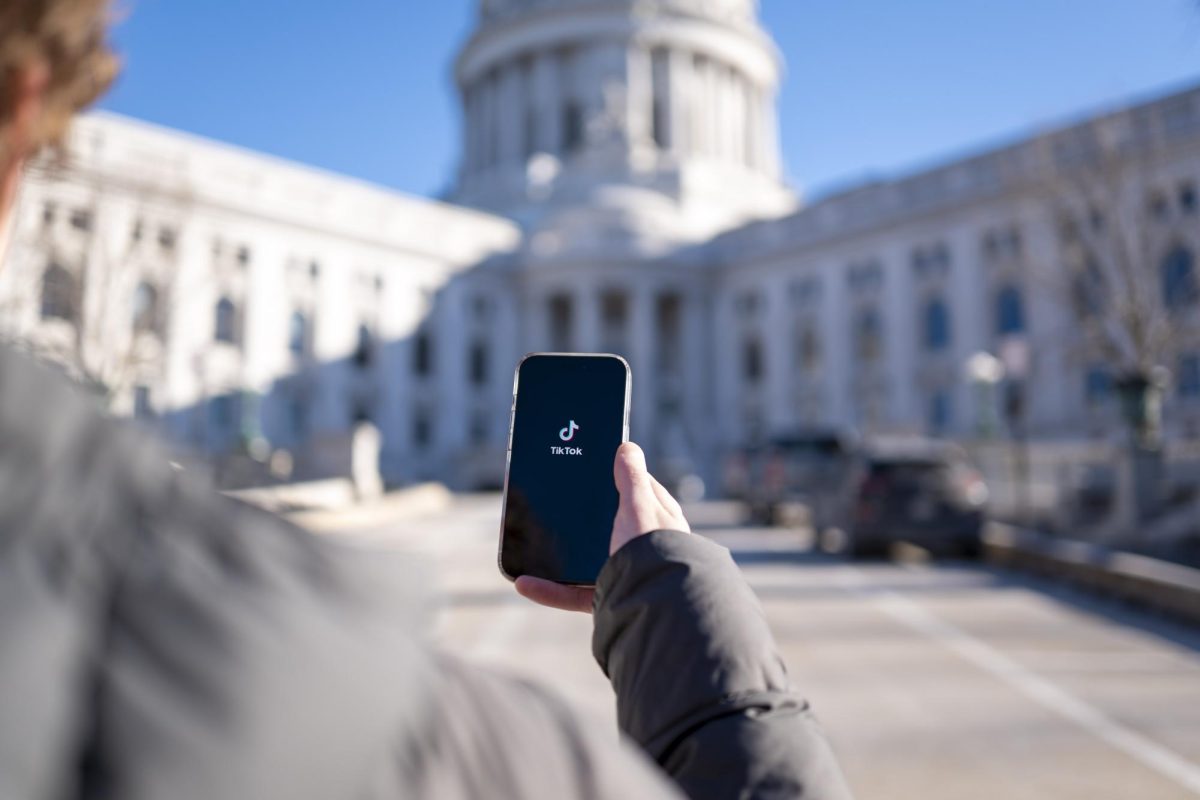

Gov. Tony Evers signed the bipartisan Assembly Bill 2 — now 2025 Act 42 — into law Friday, Oct. 31, enacting a statewide ban on cellphone use in schools, according to a press release from the office of the governor.
Wisconsin Act 42 will require public school boards to adopt policies prohibiting students from using wireless communication devices like cellphones during school, with the exemption of school-district issued electronic devices, according to the press release.
The bill was created to combat the negative effects of cell phone use for young people as well as prevent distraction in the classroom, author of the bill Rep. Joel Kitchens, R-Sturgeon Bay, said.
“2012 or so is about when social media and smartphones became prevalent and academic performance has declined, mental health has declined, the suicide rate among young women has tripled since that time, a lot of bad effects,” Kitchens said. “And this isn’t going to solve all of that, but I think it’s a step.”
The majority of the public supports bans on cellphones in classrooms, with 74% of adults in the U.S. saying they would support banning the use of cellphones during class in middle and high schools, according to Pew Research.
Nationwide, there has been a rise in movements calling for more restrictions on cellphones for kids, such as the Wait Until 8th pledge, which encourages families to wait until their student is at least at the end of eighth grade before giving them a cellphone, Kitchens said.
“Obviously, technology is not going away, but they [cellphones] really have caused a lot of problems, again, with mental health, emotionalization and all of that kind of thing,” Kitchens said. “So I think as people understand that more, they’re more accepting of this [laws restricting use of cellphones].”
While the majority of the public does support bans on cellphone use in the classroom, there has been some pushback from parents who want to reach their kids during the day, Kitchens said.
One of the most common concerns raised by parents is the question of how they could contact their children in the event of a school shooting, Kitchens said.
In such a situation, law enforcement unanimously says that they do not want students on their cellphones but instead listening to instructions to stay safe, Kitchens said.
“That’s not an appropriate thing for parents to be calling their kids if there would be a school shooting,” Kitchens said. “So you hear a lot of those things, but again, as you talk it through people understand it better.”
School boards are required to enact a wireless communication device policy by July 1, 2026, according to the press release.
While many school districts in Wisconsin already have bans on cellphone use in the classroom, this law is meant to support schools’ policies and their enforcement, Kitchens said.
School districts will write their own policies regarding how they choose to enforce a cellphone ban as well as repercussions for not abiding by it, Kitchens said.
“We’re not doing this because we don’t think schools are trying to do it already,” Kitchens said. “We’re doing it to back them up on this.”
