

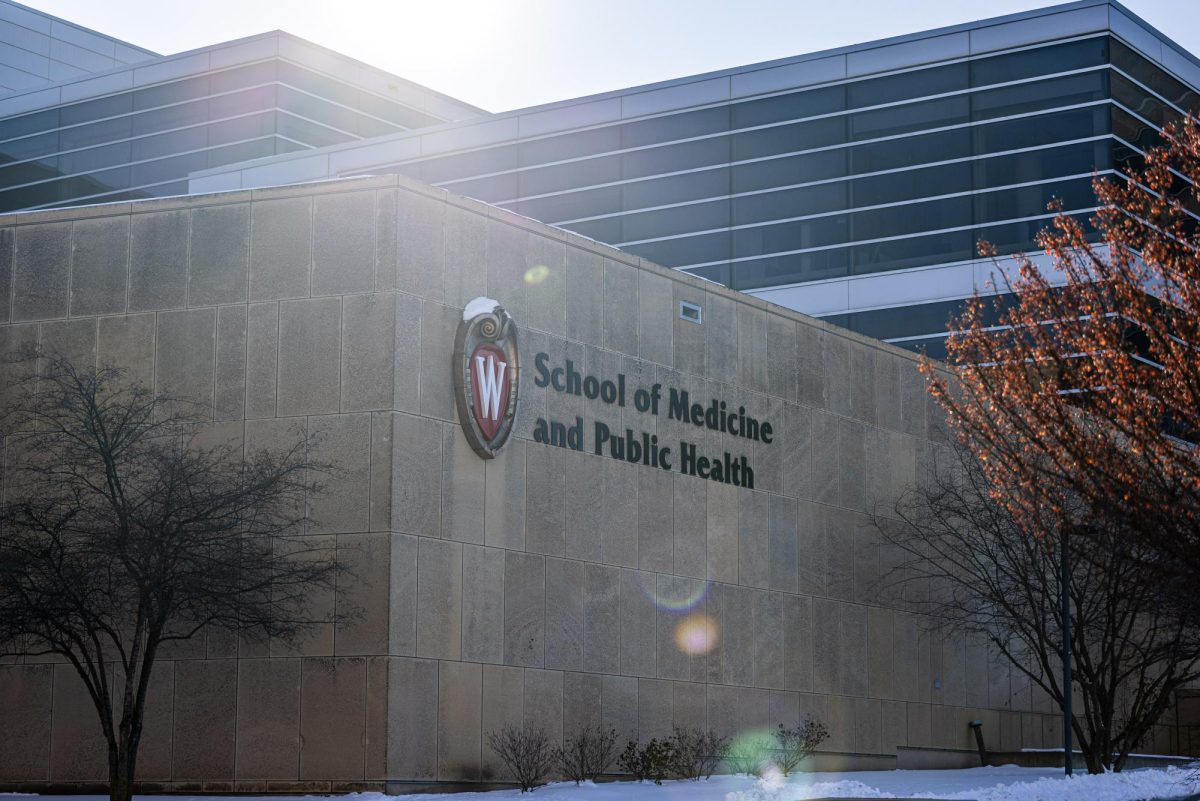

Last month, the Environmental Protection Agency repealed the 2009 Greenhouse Gas Endangerment Finding in which the Supreme Court ruled that human caused emissions and climate change pose a danger to public health, according to professor at the University of Wisconsin School of Medicine and Public Health, Dr. Jonathan Patz.
Climate change is a major threat to human health and there are many exposure pathways that we see here in Wisconsin, including heat waves, wildfire smoke and water contamination, according to Patz.
While those effects of climate change are visible in day-to-day life, other effects exist that lay under the radar.
“[Climate change causes] infectious diseases carried by insects and we’re affected by this,” Patz said.
The EPA first announced a reconsideration of the finding this summer and faced opposition by organizations such as the National Academy of Sciences, Engineering and Medicine which conducted a rapid assessment and found the science to be accurate, withstanding the test of time and further reinforced with new evidence, according to Patz.
With the evidence presented to the EPA, a different route was taken in repealing the finding. Rather than disagreeing with the science, the legal procedure of the decision was challenged by the EPA, causing the science to be undermined, according to Patz.
“[The EPA’s actions are] a full front attack and disregard for science,” Patz said. “To me, it’s the EPA’s complete abandonment of its responsibility to protect the health of Americans from environmental hazards.”
Despite this decision, scientists will keep investigating how climate change impacts human and public health while also informing the public.
Federal grants are still coming that support scientists to do research, according to Patz. But, the hardest work in this situation is advocating about current science and trying to get the reality of the scientific work out to the public, which is a responsibility Patz said he is holding himself to.
“We need to be nonpartisan and advocate the science and get out there,” Patz said. “I will be trying to lead the narrative that climate change is a public health emergency.”
There are two things that Patz recommends to students and student organizations that are passionate about climate change. Joining together with others to utilize the power of being more than one voice and also be active whether it’s in the community or talking with your representatives, according to Patz.
The parting words of Patz focused on the repealing of the finding leading to two key missed opportunities.
“It’s a missed opportunity if we go backwards, reversing the energy transition [to renewable energy,]” Patz said. “Number two, it’s a missed health opportunity because cleaner energy saves lives from improving air quality.”