



The Universities of Wisconsin and the Board of Regents have reviewed and changed policies regarding political campaigning in residential halls, both at UW-Madison and other UW system schools, according to the Feb. 5th Education Committee Meeting.
The original UW policies, created in 1988, prohibited door-to-door residence hall campaigning by political candidates or their representatives, according to the meeting document. Under the new policy, candidates or their representatives may go door to door to campaign, according to the meeting document.
“There have been no significant legal developments since 1988 requiring changes, but new threats to campus safety and evolving attitudes towards student privacy, as well as physical changes in residence hall spaces themselves, support updated approaches,” the Universities of Wisconsin said in an email statement.
Campaigning individuals who are not UW students must be accompanied by a current student at all times and wear identification, according to the document.
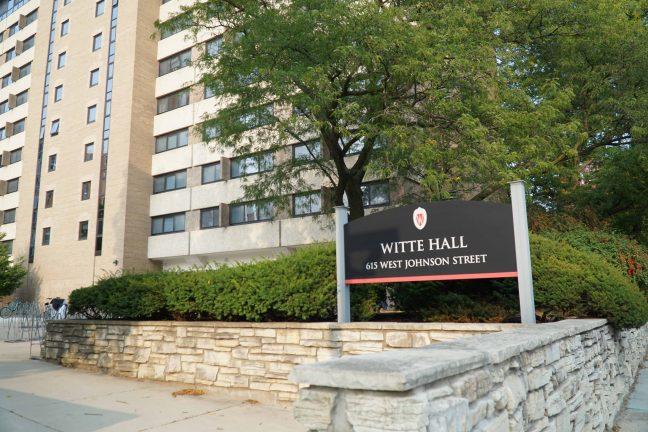
Individuals must register two days in advance and may campaign from 9 a.m. to 7 p.m. Monday through Friday in designated areas of Carson’s, Chadbourn, Dejope, Gordon, Holt, Lowell, Ogg, Sellery, Smith, Waters and Witte residence halls, according to the document.
In 2023, City of Madison District 8 Alder Muralidharan Govindarajan, known as MGR, ran for city council and partly campaigned in the dorms, which was forbidden at the time, he said. A UW housing staff member reported MGR for this, who later received non-academic probation.
“When you look up the specific rule that I broke, it just says it’s a violation of UW system Chapter 17, non-academic probation, and when you click into it, it looks like 14 different things, starting from doing drugs in the dorms to sexually assaulting someone,” MGR said. “So as a junior, my concern was, oh, this is really unfair, right? My biggest challenge should be running a good campaign or engaging with my constituents, not whether the university was going to impose sanctions on me.”
MGR appealed to the Board of Regents, arguing that prohibiting candidates from campaigning in dorms barred dorm residents from receiving political information. He also stated that he was prohibited from engaging in political speech, which is protected by the First Amendment, according to MGR.
The Board of Regents decided to maintain the non-academic probation on his transcript, and it was said that his argument about constitutionality in this situation was incorrect, according to MGR.
In 2024, the Board of Regents proposed updated policies with stricter rules and regulations, according to MGR. The revision was potentially because of the incident at UW with MGR, according to MGR.
MGR wrote a letter to the Board of Regents urging them not to proceed with the revisions, according to MGR.
“This creates a chilling effect on political speech,” MGR said in the testimony. “The hundreds of students who have campaigned safely in the dorms will be threatened with the same procedural headache I had to go through for nine months. They will be threatened with probation, non-academic misconduct and more, which could affect their opportunity at future jobs and definitely graduate school.”
He instead suggested that candidates be allowed to go door-to-door with limited volunteers, that a quick registration process be created to sign up for dorm access and that meaningful time, manner and place regulations be established, according to the testimony.
Following this, the vote on the policy revision was delayed, and a year and a half later, the new set of policies was implemented, according to MGR. These are the new rules approved at the Feb. 5th meeting, according to MGR.
“They [the Board of Regents] took up most of my recommendations, which is really good,” MGR said. “I think it shows to me that the Board of Regents are held accountable to the public, and they do respond to public pressure. I want to give the Board of Regents their credit. I think it’s important to reward elected and appointed people with credit when they do the right thing.”
MGR was the first individual to be placed on non-academic probation for campaigning in the dorms, despite dozens of others running for the same position, according to MGR.
MGR expressed concerns that past policies would affect future candidates for this office. There are two candidates running for the Alder position in the spring election this April, according to Channel 3000.
“I will say this has been a personal issue for me as an individual, because it’s still on my transcript,” MGR said. “But it’s now something that I’m going to wear as a badge of honor, rather than a black mark. I don’t want to claim responsibility for it or anything, but this whole thing happened because the university decided to enforce the rule against one person. I’m glad the rule has finally changed, I think it’s going to make it easier for a lot more students in the future.”
