


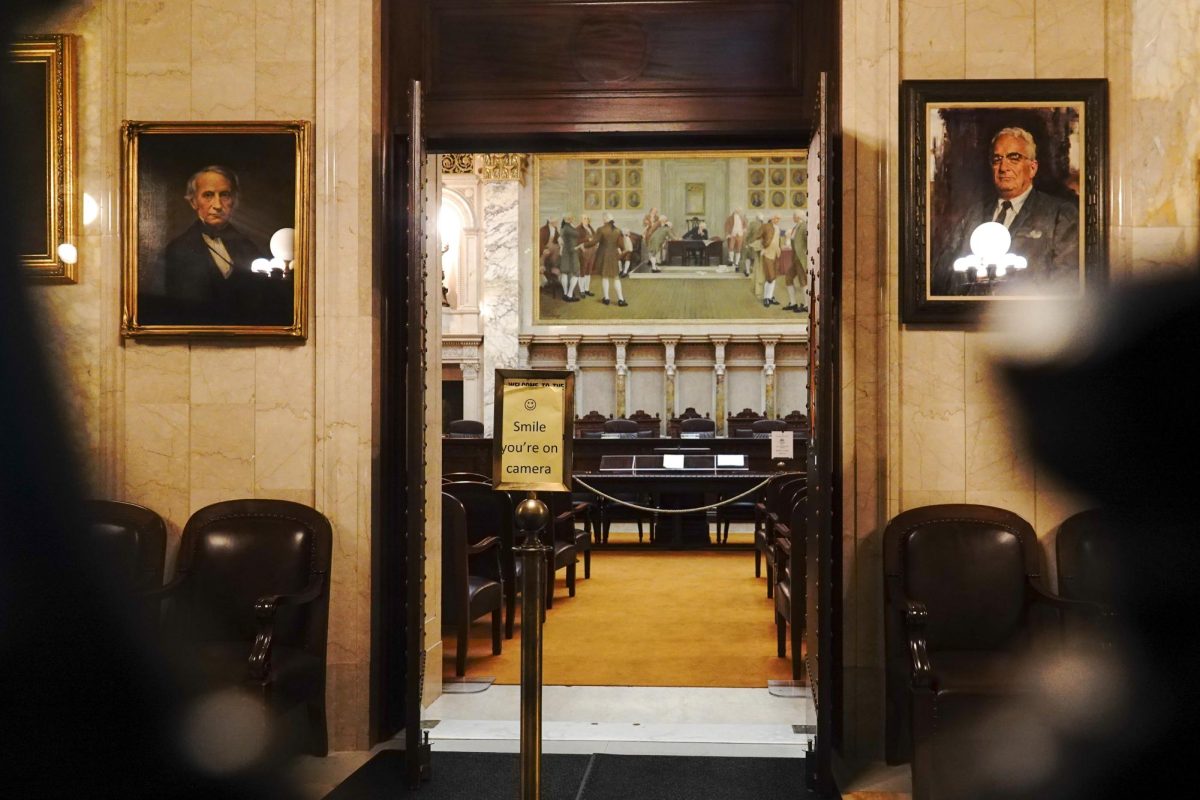

Wisconsin’s long-running version of C-Span or Cable-Satellite Public Affairs Network, named WisconsinEye, shut down due to a lack of funding in December 2025, according to Isthmus News. A lack of private funding, issues with high operating costs and economic uncertainty led to the shutdown, according to Isthmus News.
WisconsinEye Public Affairs Network has been on the air for 18 years, encouraging citizens to examine the inner workings of state government, according to the Wisconsin Freedom of Information Council.
The non-profit program provided free, unedited coverage of every Senate and Assembly meeting for Wisconsin citizens, according to WI FOIC. WisEye not only provided information on general assemblies and other politically relevant events but also captured democracy firsthand, according to the WI FOIC.
WisconsinEye did not favor the political left or right, WI FOIC stated. Citizens could tune into the network and witness how legislative and executive decisions are made in order to take part in state-level civic engagement, according to WI FOIC.
The shutdown caused WisEye to stop all free broadcasts and shut down its website containing over 30,000 hours of archived videos, according to AP News. This change has made Wisconsin the only state that does not routinely broadcast floor debates, according to AP.
The implications of the ongoing shutdown have caused a lack of transparency within hearings, according to State Assembly Representative Renuka Mayadev, D-Madison.
“In some committees, [the Assembly] had constituents who had to be removed or rejected because they were trying to record,” Mayadev said. “It hasn’t been hospitable to transparency since the site has been down.”
Another issue was constituents’ ability to see which representatives support or oppose a bill, Mayadev said. Without WisEye, there is no quick way to obtain committee hearing information for up to a week afterward, according to Mayadev.
The best way for constituents to stay current on legislation, without programs like WisEye, is to sign up for their representatives’ newsletters, which can typically be accessed through the assembly website or the representative’s website, Mayadev said.
WisEye funding has been a topic of discussion for years, as the Wisconsin Legislature’s finance committee established a $10 million endowment in the state budget for the network in 2023, according to AP News. WisconsinEye had to match every dollar that was requested from the fund, and the ruling was set to dissolve by June 2025, according to AP.
The budget agreement required more donors to step up and contribute, yet it fell short of matching the amount to unlock state funds, according to WKNOW 27. The network officially launched a GoFundMe with a $250,000 goal to cover three months of operations, according to AP News.
Most of the program’s funding comes from charitable and philanthropic dollars, according to president and CEO of WisconsinEye Jon Henkes. But due to the 2020 COVID-19 pandemic, nonprofit networks like WisconsinEye struggle to receive as generous of funding as pre-pandemic times, according to Henkes.
“Donors became much more cautious about the economy, not willing to make multiple-year commitments,” Henkes said. “The competition for those dollars has increased dramatically in the last several years.”
The same donors who have given to WisconsinEye also donate to highly competitive political campaigns in Wisconsin, according to Henkes.
The record-breaking monetary donations to candidates and campaigns have made it difficult for WisEye to keep up, as the program does not align with any left- or right-leaning cause, according to Henkes.
“We’re the neutral ground,” Henkes said.
A bipartisan deal is in the process of being passed in both houses, ensuring the $10 million endowment will go into a trust fund to earn interest, while making sure WisEye can still fundraise a few hundred thousand dollars to cover yearly operations, according to WKNOW.
House Majority Speaker Robin Vos, R-Racine, said lawmakers intend to sign a short-term contract with the program to broadcast the Assembly’s February floor period, according to WKNOW.
The bipartisan plan aims to bring WisEye back into the public sphere as early as February, according to Wisconsin Public Radio.
The legislation will establish a unanimous agreement between the parties, Mayadev said.
“Hyper-bipartisan legislation is rare in this capital, so the fact that we have it with both Speaker Vos and leader Neubauer, both on the bill and leading it, feels really good,” Mayadev said.
The deal would guarantee that WisconsinEye funding will remain a priority in the long term, according to Henkes.
Donors could be assured that WisEye remains financially stable enough for regular funding once again, Henkes said.
“On an annual basis, the bill gives donors a whole lot of confidence that there’s a longer term solution to funding. Just the fact that this [agreement] is happening is creating a higher sense of confidence with prospective donors,” Henkes said.
The bill will pass through the Senate and be placed onto the governor’s desk for a final signature, according to Henkes.
As WisEye seeks to return to the air, the channel hopes to expand insight into the UW campus in the near future, Henkes said. As the 2026 campaign cycle begins, WisEye aims to amplify student voices, according to Henkes.
“Oftentimes, the people who testify before committees and hearings are people who are in the working world and who are advocating for a cause or an organization, and one of our goals is to help the younger generation to have access and to have their voices heard,” Henkes said.
WisconsinEye, as a nonpartisan program, has become a staple in Wisconsin politics, according to Henkes.
Both parties want to see a network remain independent of government bias, Henkes said. WisEye can continue to be able to spread nonpartisan news and keep viewership focused on a neutral ground, according to Henkes.
“[WisEye] is providing citizens with gavel to gavel coverage of what happens in our state capital. It’s where truth takes its rightful place,” Henkes said.
Editor’s note: This article was update to correct “hyper-partisan” to “hyper-bipartisan.”
