


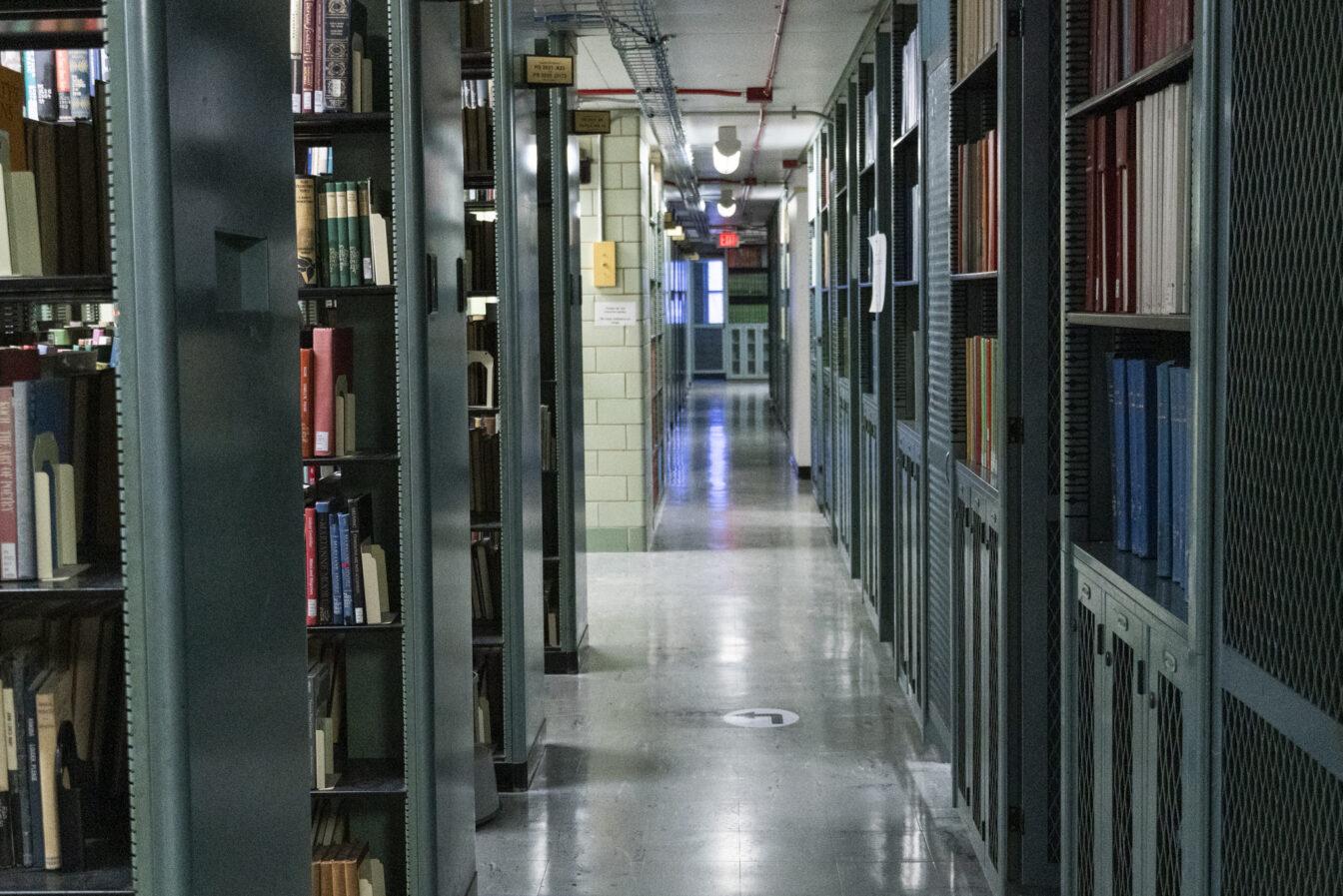

Chancellor Jennifer Mnookin announced budget reductions June 23 across campus following changes in federal funding. As a result, the university’s libraries have received a 7% budget cut, according to the University of Wisconsin-Madison Library’s website.
This has caused the UW-Madison Libraries to implement changes for this upcoming semester. These include reduced hours for College, Memorial and Steenbock Library and the closure of the Astronomy, Mathematics, Physics Library and the Social Work Library. There is also a reduction of support for the Business Library and the Geology Library, according to the announcement.
Some students anticipate the change in hours to impact their schedule during the school year. A UW sophomore, Jane Wilder, said the library is very important to her as she uses the space to study and prepare for classes.
Wilder expects the reduced weekend hours to impact her routine dramatically. She said she was one of half a dozen students who used the 3rd floor study space of College Library early in the morning and on weekends. As a result, she expects the change in hours to impact her planned schedule.
Wilder emphasized the importance of utilizing different spaces for different activities, such as studying, reading and more.
“There’s a lot of value in studying in a place that’s not where you sleep and where you do the rest of your activities,” Wilder said.
Other financial uncertainties remain, leading to budget reductions acting as precautionary steps. The 7% budget cut for UW-Madison Libraries was initiated because of potential changes to the federal indirect reimbursement rate. This could cost the university anywhere from $65 to $130 million, according to a UW announcement.
Beyond being a space to study, the UW-Madison Library system provides a plethora of services to students — including book lending, printing and renting out computers. This raises some concerns for students who depend on these supplies.
A senior at UW Rui Wu frequently uses the library to borrow books, in addition to utilizing study spaces. Wu says she goes to Memorial Library nearly daily as it is close to her and not as busy as other libraries.
Further, Wilder pointed out students rely on a variety of resources that the libraries provide. For example, she is currently having issues with her laptop, thus she has been relying on the library-provided monitors until hers can be repaired. Wilder expects she will now need to use the library even more than she has in the past.
But, some students do not anticipate there to be a great impact on the broader student population, as most libraries will remain open during busy hours. Wu said she did not know about the change in hours and does not think it will be important to students on a regular basis.
Wu said she only uses the libraries during the week, and while she usually uses Memorial Library, there are others she can also go to.
Similarly, Wilder said she does not know if it will impact other students as much as herself, personally.
“There’s a lot to be said for having a 24-hour library,” Wilder said.
High-demand materials from the Business and Social Work Libraries will be moved to Memorial Library, and high-demand materials from the AMP and Geology Library will be moved to Steenbock Library, according to the UW’s website.
College Library, known for being open 24 hours five days a week, will remain open throughout the week, but is reducing its Friday and Saturday hours from 11 a.m. to 6 p.m. instead of until 11 p.m. Memorial and Steenbock will also remain open seven days a week but with reduced hours during low-demand time periods, including Friday and Saturday evenings and Saturday and Sunday mornings.
Library staff will still be available to provide all services during the hours in which the libraries are open. Webpages will reflect library hours, which continue to be revised as their schedules are finalized, according to the UW’s website.
While many students find libraries to be an integral part of their schedule, there are alternatives to many of their services. For freshmen and anyone else living in a dorm, most residence halls have designated study spaces available for their residents. Madison also contains cafes and other restaurants that can provide space, according to UW’s website.
Students may be able to utilize areas like the Terrace at Memorial Union and other outdoor spaces while the weather remains favorable. Madison also provides computer labs in other buildings such as residence halls, Union South and Van Hise, as stated on UW’s InfoLab’s page.
While these budget cuts will cause disruptions to some students’ routines, the city of Madison and UW campus contain a plethora of public cafes and restaurants as potential alternatives for UW students, according to the Wisconsin Union website.
Editor’s Note: This article was updated to clarify that College Library has been historically open 24 hours five days a week and is only reducing its Friday and Saturday hours.

