
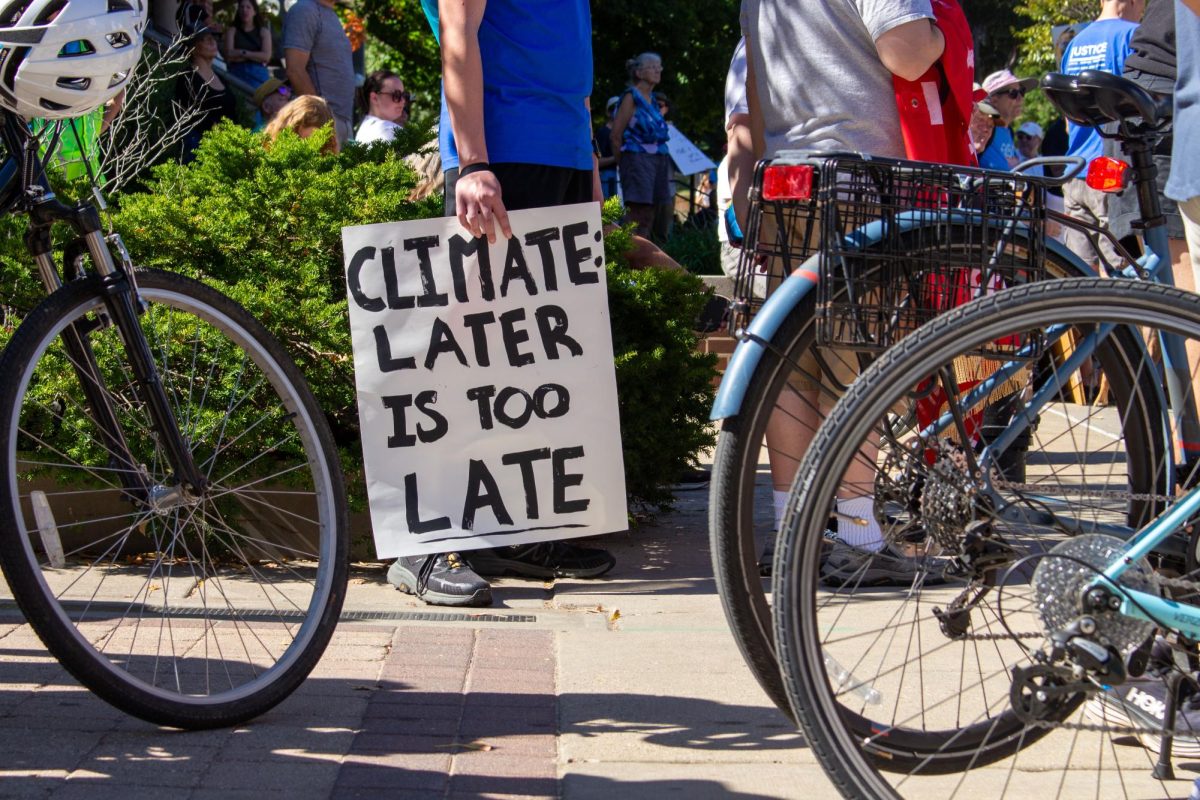

Months of severe flooding blanketed the U.S. in 2025, which climate experts dubbed “The Summer of Flooding.” The harsh reality of climate change and the societal and economic damage it carries are increasingly evident to many Americans, according to a Gallup Poll. Still, professors and climate scientists at the University of Wisconsin encourage individuals to learn to embrace our reality, work to shape our own practices and join in the effort to adjust to the ever-changing climate.
Climate change creates more variability within our weather systems, according to professor of atmospheric and oceanic sciences at UW Jonathan Martin. Despite warming winters, we may have more frequent and extreme weather events, heavy snow and rainfall, according to Martin. What is less likely to change is variability, according to Martin.
“In the background, climate change is so subtle, although it integrates into something you cannot deny … the day to day forecasts will not suffer,” Martin said.
Historic snowfall swept across the state March 15-16 breaking records and causing power outages, according to Wisconsin Public Radio. According to Martin, there is still work to be done in understanding how these intense events, often carried by winter cyclones, are formed and how to understand them.
“What I hope that my world does is informs people about the nature of the atmosphere and also provides warnings in certain instances of weather that may or may not be bearing down,” Martin said.
Through continued research on cyclone formation and patterns, Martin hopes that in the next 15 years atmospheric experts will be able to create sub-seasonal and seasonal forecasting. This would entail long form forecasting, which has less detail than 3-5 day forecasts but accounts for cold or hot spells, according to Martin.
“Paint the complexion of what the next 6-7 weeks will be like,” Martin said. “What will they be punctuated by in the middle of the winter? Will you have a cold air outbreak during the period? Will you have two or three storms over that period of time?”
Predictability and understanding of our changing climate has more than just day-to-day applications, according to Martin. Both business and civic plans benefit from anticipating what Martin calls compound events, which bear convective thunderstorm activities to the south and heavy snow to the north, according to Martin.
Adopting more sustainable and adaptive practices can pay off economically for farmers, according to the Director of Wisconsin State Climatology Office Steve Vavrus.
Variability is important for farmers and other businesses tied closely to climate, according to Vavrus. Working to become more adaptive is a first step, and oftentimes these come with financial benefits. Manure injection, putting manure into the soil, blocks methane from going into the atmosphere and phosphorus into water ways, and can increase profitability, according to Vavrus.
“These billion dollar weather disasters are biased towards the winter and not the summer, which may come as a surprise, but it is true,” Martin said. “But when we add on top of the normal winter weather events, these compound events will make the billion dollar weather events even more numerous in the winter time.”
Understanding that climate change is no longer inevitable but is already our reality is pertinent to working towards a future that fits our climate, according to Vavrus. He said the best thing to do is prepare with the understanding that these extreme events are happening more frequently.
Communities must update their infrastructure to mitigate the effects of climate change, according to Vavrus. Last summer, Milwaukee was hit with what was considered a 1000-year rain fall. The stormwater pipes in the area of the flooding were designed in the 1950s and could not account for the intense rainfall, according to Vavrus.
Less impervious sidewalks and ground cover for crops, which act as wet land protection, were examples of more adaptable infrastructure suggested by Vavrus. Further, Martin also said that climate change is past inevitable, emphasizing a need for change across civic infrastructure.
“It is not as if we are waiting for it to begin – it is already going on. One starts to wonder if there are things we can do in broader and civic infrastructure so that we can respond to that and maybe take advantage of that,” Martin said.
One suggestion by Martin was understanding how ice and snow fall changes should affect how we salt our roads. There is an importance in respecting and understanding nature, knowing that we cannot control it, according to Martin.
“The more we have allies in our respect for nature and our respect for its complexity, I think the better off we are as a society, because then we stop pointing a finger at each other and start joining hands to solve problems,” Martin said.
For Vavrus, hope is of utmost importance. Taking both mitigating and adaptive steps towards reading the impact of climate change, communities can band together to adapt to our new reality, according to Vavrus.
Climate change, as we are experiencing it today, is both slow and invisible. It does not have the drama of smog, which sparked climate revolutions of the 1970s, Vavrus said. Humans created the climate change crisis, and we can fix it, he said.
“We are not like the dinosaurs with a big asteroid coming and nothing they can do about it,” Vavrus said. “We created our asteroid slowly — largely with industrialization — but there is a lot we can do to soften the impact from it.”
Students and community members who want to join in tackling the beast of climate change should start with a deep understanding and knowledge base, according to Vavrus.
Vavrus, who is also the co-director of the Wisconsin Initiative on Climate Change Impacts, suggested the 2026 Assessment report as a starting point. It both paints a realistic picture of our future while maintaining hope, according to Vavrus.
“I have no pessimism at all, every day, every week I spend 50 hours surrounded by people who want the world to be better, that is a really good place to be,” Martin said. “I have vigilance about the future, we have to ensure that we do not let people without that respect be the ones who are calling the shots.”