




Last weekend, two men stood in their impoverished quarters. One of them burnt a manuscript while the other stood closer, their desperate attempt at keeping warm. It was Friday in Madison, but on stage at the Overture Center, it was cold — it was Christmas — it was 1800s Paris at the height of bohemian culture. The door opened, and the burning drama was forgotten as parrot-murdering conspirators, landlords, short-lived fortunes and love walked through the doors.
So unfolded Madison Opera’s production of “La Bohème.” A classic by Giacomo Puccini, the opera was composed in 1895 based on the episodic stories ‘Scènes de la vie de bohème’ by Henri Murger.
Delineated with humor, the opera is a cultural salute to 1800s Bohemian lifestyle and an etching of the profound human experience.
In a statement addressed to the friends of Madison Opera, general Director Kathryn Smith said this is the reason for “La Bohème’s” success despite initial disapproval after its 1896 world premiere.
“I think [“La Bohème’s”] popularity is due to its humanity … Some operas tell big stories about royalty and history: “La Bohème” is about us as people,” Smith said in the statement.
“La Bohème” also holds a special place in Madison Opera’s history, as Smith said in the statement.
This year marks Madison Opera’s 6th production of “La Bohème,” an indicator of the classic’s popularity in the 21st century.
“‘La Bohème’ is emblematic of this company — it was the first full opera we staged, in the auditorium of Madison East High School,” Smith said. “‘La Bohème’ is about us in Madison.”
The production featured mainly debut artists, including Terrence Chin-Loy and Renèe Richardson, who play protagonists Rodolfo and Mimì, respectively. The production also involved the Madison Youth Choirs accompanying the Madison Opera Chorus on stage.
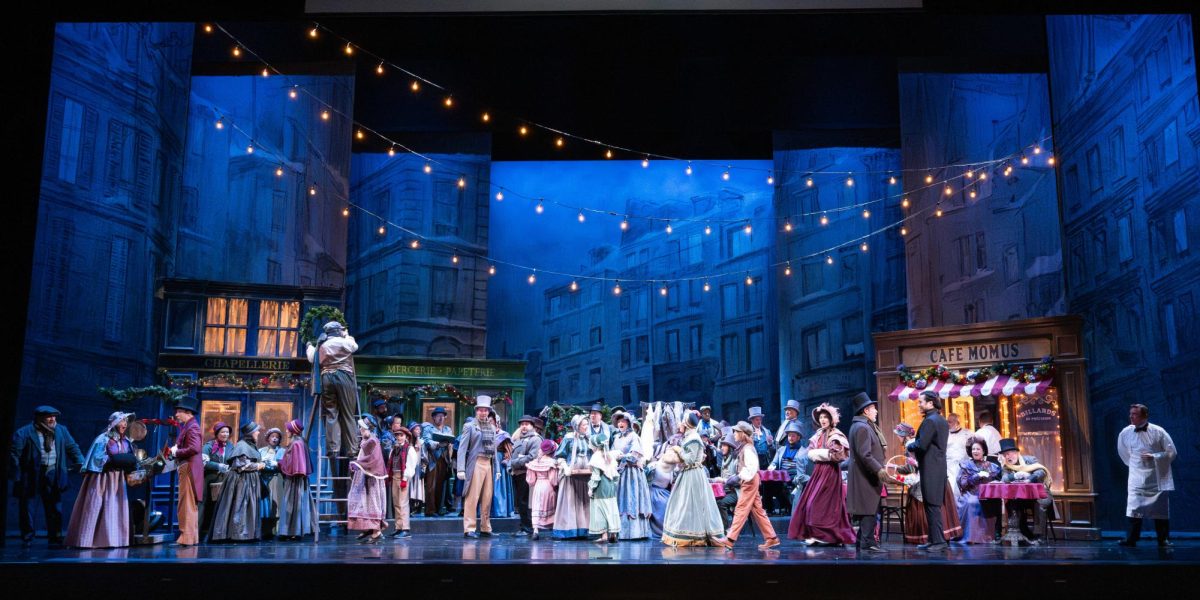
The production was most noted for its exquisite set designs. The sets included an impoverished Latin Quarter garret, Parisian streets near Café Momus and a toll gate and inn at the edge of Paris. Madison Opera’s set designs created a contrast between emotions and light. Starting with the dim and calm Latin Quarter garret to the bustling, excited street near Café Momus.
Another notable mention is the two 20-minute intermissions, which remain a novel practice for a production but provided a unique experience.
“La Bohème” served as Madison Opera’s reliable beginning to a more anticipated 2025-26 season, with the world premiere of “Everlasting Faint” and later performance of Mozart’s “Così fan tutte.”
