


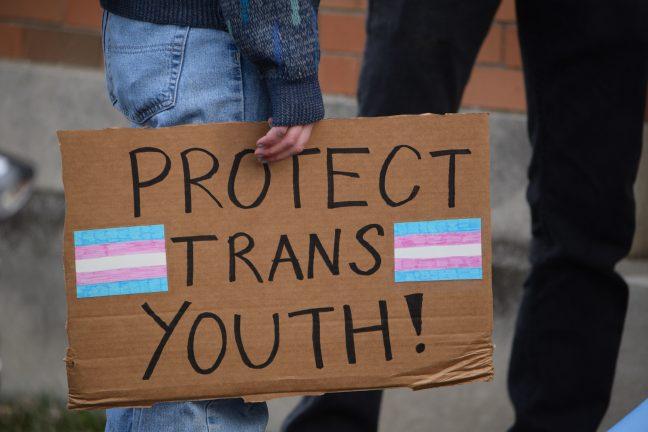

In the aftermath of Donald Trump’s 2024 election victory, the U.S. finds itself in a moment of returned uncertainty for LGBTQ+ adults. A recent survey reveals that over half of LGBTQ+ people, including an alarming 84% of transgender and nonbinary respondents, have made or seriously considered major life changes like moving, changing jobs or updating legal documents in anticipation of potential threats to their safety and rights, according to Advocate.
Currently, six in ten LGBTQ+ individuals state they are worried about how Trump’s anti-LGBTQ+ policies could impact them or their families, according to the survey. That concern is even greater among transgender people specifically, with nine in 10 expressing worry. Trans respondents were also far more likely to say they are ‘very worried,’ 60% compared to 36% of LGBTQ+ people overall, according to Advocate.
This data highlights a chilling reality for many queer people today. Trump’s return to power has reignited fears of suppression, undoing years of progress and rekindling a climate where visibility and pride make you inherently vulnerable to an increasingly hostile social climate.
For instance, Executive Order 14187, titled “Protecting Children from Chemical and Surgical Mutilation,” prohibits gender-affirming care for individuals under age 19 by withholding federal funding from healthcare providers offering such services.
This policy has led to the cessation of gender-affirming treatments at institutions like Fenway Health in Boston, which cited the risk of losing federal funding as the primary reason for halting services, according to AXIOS Boston.
Additionally, Executive Order 14201, “Keeping Men Out of Women’s Sports,” threatens to revoke federal funding from educational institutions that permit transgender girls to participate in women’s sports teams, framing such participation as a violation of Title IX.
These actions have prompted legal challenges and have been criticized for undermining the rights and well-being of LGBTQ+ individuals, particularly transgender youth.
The fear that queer people have experienced is not irrational. During his previous term, Trump’s administration rolled back protections for transgender people in healthcare, education and the military. His rhetoric emboldened anti-LGBTQ+ groups and helped normalize the idea that queer rights are negotiable.
Now with many of the same policies resurfacing even more aggressively, LGBTQ+ individuals face the difficult task of safeguarding their identities in a political landscape that often treats their existence as a partisan issue. For students, especially those attending universities in politically divided states like Wisconsin, this moment poses a painful question — how do you remain true to yourself when your safety might depend on being invisible?
For many LGBTQ+ students, authenticity is a form of resistance. College campuses have long been places where young people discover who they are, often for the first time without external opinions from family or community pressure.
But, under current circumstances, even these relatively safe spaces feel fragile. Policies affecting trans healthcare, campus speech and diversity programming have become battlegrounds. Students are reminded daily that their right to exist comfortably is conditional on who holds power.
To resist, queer students can continue to remain visible and authentic. But more importantly, active resistance is crucial.
Organization through student governments, diversity centers and campus organizations to demand institutional support are ways that students can push back against forces of suppression.
Universities must recognize that LGBTQ+ inclusion is not a political statement but a commitment to student well-being. This means ensuring that campus health services include gender-affirming care, housing policies respect students’ identities and that faculty and staff receive training on supporting queer and trans students.
The mental health dimension of this issue cannot be ignored. When fear dictates daily decisions, such as what to wear, where to live or which pronouns to use, the psychological toll is intense. Studies consistently show that LGBTQ+ youth experience higher rates of depression, anxiety and suicidal ideation — especially when exposed to discrimination or unsupportive environments.
Trump’s victory and the subsequent wave of anti-LGBTQ+ rhetoric across the country risks deepening this crisis. Universities can mitigate this harm by expanding counseling services, training mental health professionals in queer-affirming care and partnering with local advocacy groups to create networks of support. Students must know they are not facing these challenges alone.
The LGBTQ+ community is not merely reacting, they are responding with resilience. Wisconsin student organizations and advocacy groups are mobilizing to protect one another. Campus Pride, GSAFE and local Pride centers are hosting legal clinics to help trans students update their documentation before potential restrictions take effect. Queer student leaders are using social media to share safety resources, organize voter registration drives and amplify marginalized voices.
For allies, this moment demands more than empathy. It requires courage to stand up for the rights of their LGBTQ+ peers. Professors have the opportunity to integrate queer perspectives into their curriculum. Employers can ensure their workplaces are affirming and safe. Classmates can intervene when they witness harassment. Every small action builds a culture of belonging that counteracts the fear many feel. Wisconsin has the opportunity to lead by example and prove that state-level leadership can protect vulnerable populations even when federal leadership fails to do so.
Ultimately, the path forward lies in collective resilience. The question facing LGBTQ+ Americans is not whether they can survive this political moment, but how they can do so without erasing themselves.
For students, this means finding strength in community through joining organizations, speaking up in class and supporting peers. For educators and officials, it means refusing neutrality when basic human dignity is at stake.
And for the community, it means remembering that advocacy and authenticity are not opposites but allies. In a time when fear threatens to silence so many, choosing to live openly remains the most powerful act of defiance.
- Resources regarding suicide prevention and mental health:
- 988 Suicide & Crisis Lifeline: 988 https://988lifeline.org/help-yourself/loss-survivors/
- Crisis Text line: Text HOME to 741741 https://www.crisistextline.org/
- Trevor Lifeline crisis intervention and suicide prevention services to lesbian, gay, bisexual, transgender, queer and questioning (LGBTQ+) young people: https://www.thetrevorproject.org/get-help/
- UHS 24/7 crisis support 608-265-5600 (option 9)
- UHS suicide prevention resources: https://www.uhs.wisc.edu/prevention/suicide-prevention/
