


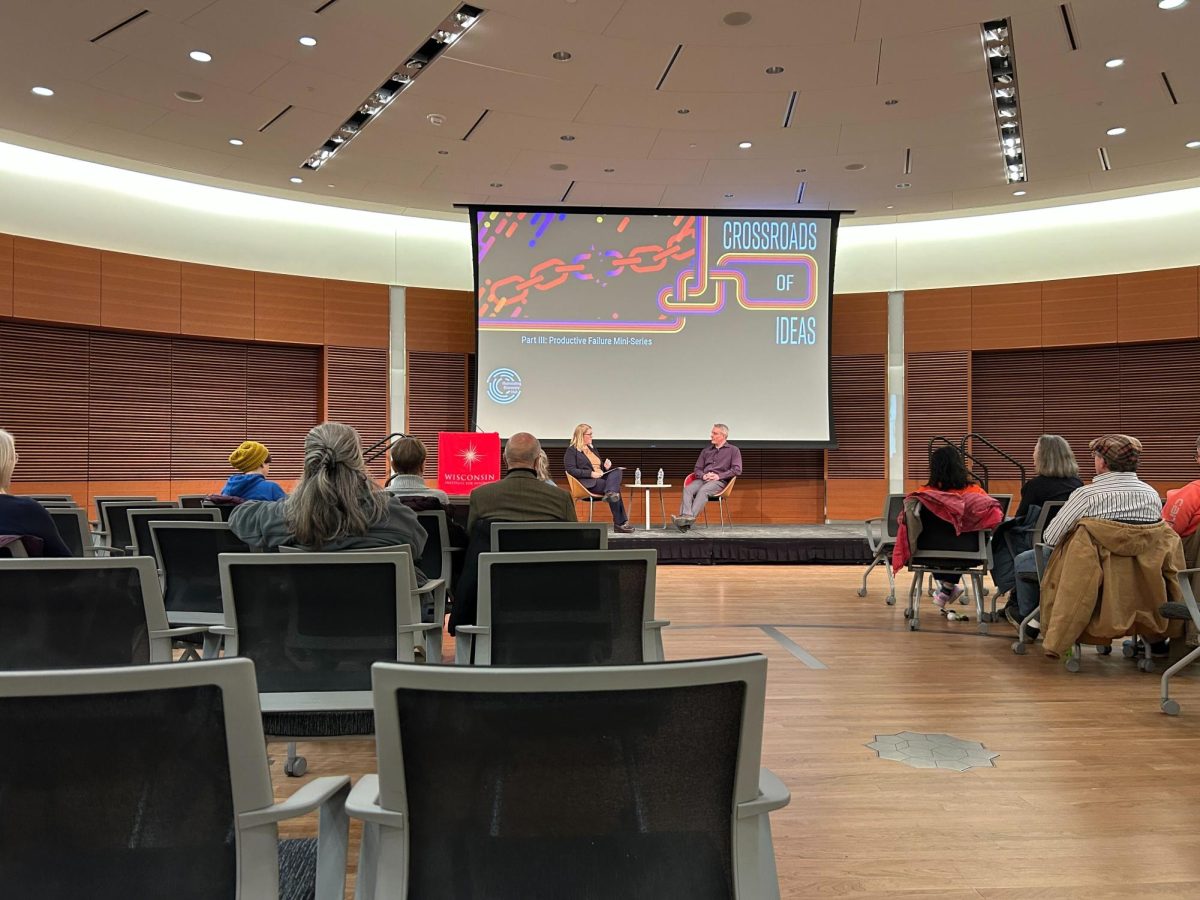

The Illuminating Discovery Hub hosted the Crossroads of Ideas public talk ‘When Antibiotics Fail,’ the final of a three-part mini-series on “productive failure” March 18. University of Wisconsin assistant professor of plant pathology Marc Chevrette and the executive director of the Tiny Earth program Sarah Miller spoke about antibiotic resistance and current research trends used to combat it.
Antibiotics are chemicals made by bacteria and fungi that humans have used to treat infections, according to Chevrette. The discovery and development of antibiotics has been life-saving, allowing people to survive infections that would have killed them only 100 years ago, according to Chevrette. Yet, in the last century, antibiotic resistance has risen, largely due to overuse, according to Miller.
A single infection contains many different types of bacteria, some of which will be resistant to the antibiotics, according to Chevrette. The antibiotic is able to kill some amount of bacteria, but the resistant ones will stay alive, multiply and even transfer their resistance to other nearby bacteria.
“Scientists worldwide are warning of a looming crisis as antibiotic resistance surges globally, predicting 40 million deaths by 2050,” Miller said.
From 1940-1960, there was a huge boom in antibiotic discovery, largely due to finding antibiotics produced by bacteria in the soil, Chevrette said. Today, new antibiotics are difficult to find, leading to a “problem of rediscovery,” according to Chevrette.
“Recently, we’ve been striking out in finding new antibiotics … you can find streptomycin [in soil] over and over and over again,” Chevrette said.
In order to try to find new antibiotics, researchers are taking a few different paths. In Chevrette’s lab, they look to environments that are underexplored for antibiotics, like the leaves of plants fighting off their own infections or the bacteria on the skin of frogs, salamanders and snakes, according to Chevrette.
“We’re taking that kind of discovery approach to see what types of molecules they’re producing, and maybe we can use those to develop new antibiotics,” Chevrette said.
The Tiny Earth program allows students to take part in this type of research, according to Miller. Here, students take part in a semester-long research course, where they investigate soil samples for new antibiotics, Miller said. Any interesting molecules that the students find are sent to the Tiny Earth hub at the Wisconsin Institute for Discovery, which currently has more than 4,300 isolated compounds in its collection, Miller said.
“That’s where Marc [Chevrette] then has this playland of 4,300 isolates to play with,” Miller said.

