


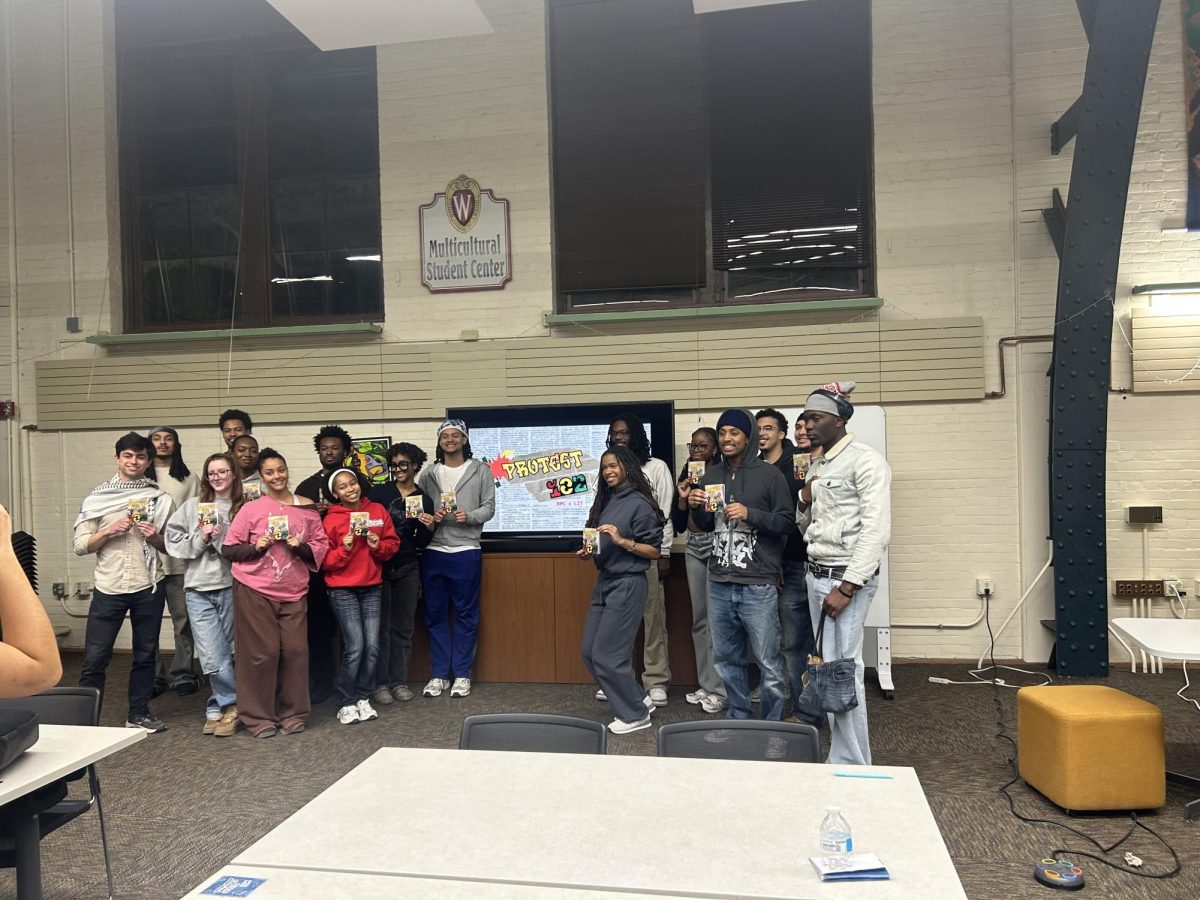

The University of Wisconsin’s Blk Pwr Coalition held an event in collaboration with the Leaders Igniting Transformation club Wednesday to talk about the history of the Black Power Movement.
The event was intended to host Black Panther Party members, Dorothy Robinson and Shaheda Moore, however, they were unable to attend due to health concerns, according to a BPC Instagram story.
Instead, the event focused on honoring the legacy of the Black Panther Movement and on how it has inspired current-day protests.
The event was led by multiple BPC members and started with a presentation about the Black Panther Movement. According to their presentation, the Black Panther Party was founded in 1966 by Huey P. Newton and Bobby Seale.
The Black Panther Party began due to the failure to find a Black power organization that aligned with their values of anti-capitalism and armed self-defense, according to the presentation. The party’s initiatives were to monitor police activity in Black communities and campaign against police brutality, according to the presentation.
Their presentation mentioned the Black Panther Party’s 10-point program and the party’s strategies.
After the presentation on the history of the Black Panther Party, members were given zines. Zines are small magazines that are used as an informative tool for marginalized communities. The zine included information about protesting, student resources and legal rights for students.
The meeting then shifted into roundtable discussions. Members gathered into small groups and engaged in questions surrounding present-day issues and strategy implementation.
Students discussed ICE protests and how they are parallel to past Black Panther Movement protests. Members also talked about strategies students can utilize to make mobilization more effective. BPC member Evan Epps shared the importance of knowing your rights when protesting and said that people often think they know their rights, but they don’t fully understand them.
Throughout the rest of the meeting, discussants talked to each other about how student activism can foster social change.
According to BPC operating officer Marques Watts, BPC started in 2023, in response to a racial incident that had occurred on campus. Watts said his peers had felt there had been a lack of acknowledgement and accountability from the university after this incident.
