

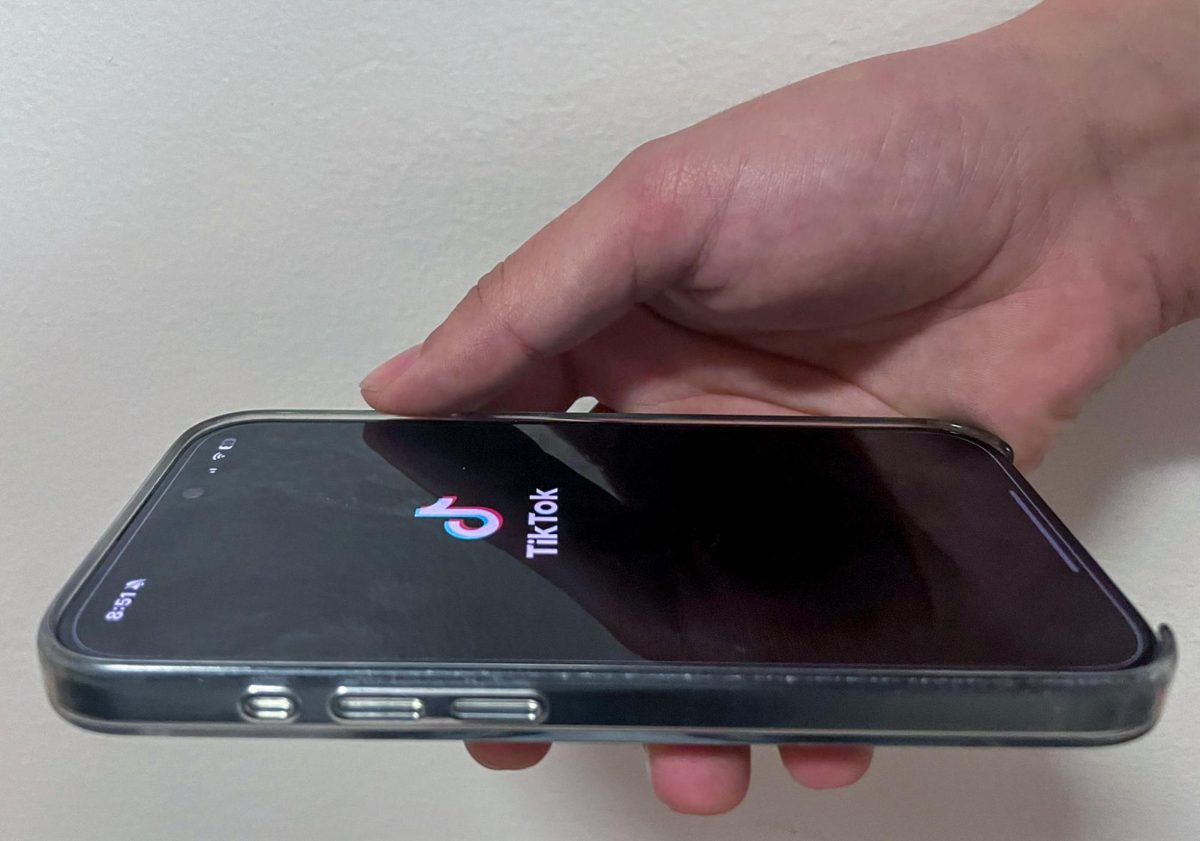

For college students, it’s almost standard to lay down at night and “doomscroll” after a long day of classes, studying and socializing. But this scrolling impacts sleep, and it could be posing harm to mental health.
In a November 2025 study in JAMA Network Open, University of Wisconsin researchers explore this idea, questioning how late-night phone use may be correlated with suicide risks. In the end, it really depends on how the phone is being used, for findings were very nuanced, according to research assistant professor in the Center for Healthy Minds, Ross Jacobucci.
“If you’re using your phone to message with individuals that are friends to increase your social connection, we’re going to see positive outcomes,” Jacobucci said. “If you’re just scrolling through things and not using [the phone] in an active sense for communication, that’s not a good thing.”
This passive use of the phone, characterized by simple scrolling, can cause increased suicidal thoughts the following day in individuals who are already suicidal due to social comparison to others online and disrupted sleep, Jacobucci said.
Poor sleep has a cascading effect, affecting mental health for the next day and even into the next week, Jacobucci said. Growing research shows that sleep is highly correlated with emotional health because poor sleep can cause greater emotional instability, increase negative thinking and reduce the brain’s ability to regulate emotions, according to Assistant Director of the Wisconsin Institute for Sleep and Consciousness and Assistant Professor in the Department of Psychiatry, Stephanie Jones.
“High quality sleep is essential for resetting your emotional and cognitive baseline,” Jones said. “Sleep takes [the brain] down back to the baseline so that it can learn and take up emotional information effectively. When people are sleep deprived, their emotion regulation skills go out the door.”
There are three main issues with nighttime phone use, according to Jones. First, blue light emitted by phones can shift internal clocks and push sleep time later. Second, scrolling, texting or watching media on phones at night keeps the brain engaged and awake when it should be winding down. Lastly, a brain that is sleep deprived, especially at night, is prone to interpreting things inaccurately, assuming the negative and being emotionally overreactive, Jones said.
Sleep is especially important for college-aged individuals because students are still of adolescent age with developing brains, according to Jones. Sleep is essential for learning — a well-rested brain is needed to take in new information, and sleep is necessary to consolidate content after learning and integrate it into long-term memory storage. Learning for college students doesn’t just mean formal concepts like class content but also informalities such as self identity, according to Jones. The more learning done, the more the brain needs sleep, Jones said.
The study, pioneered by both Jacobucci and Jones, also exemplified how AI is becoming essential in scientific research, Jacobucci said. Within the study, participants downloaded an app that collected a screenshot every 5 seconds their phone was in use, leaving roughly 90,000 screenshots for each individual every month, according to Jacobucci. With such a mass amount of data, AI became an essential piece of the study through analysis, Jacobucci said.
“Five years ago, before AI really became more common, we couldn’t do a lot of what we’re doing now,” Jacobucci said. “From an analysis perspective, everything is AI.”
AI has the potential to increase the velocity at which a complex topic like suicide is understood. Suicide affects people of adolescent, college and older age, and the surface for how AI can help is just barely being scratched, Jacobucci said.
“This is a really important topic, and there are a lot of open questions,” Jacobucci said. “We could always use more people that are interested in this and willing to get involved.”
Jones and Jacobucci hope to follow up this study with a secondary exploration that requires participants to wear a headband as they sleep that records EEG, or electroencephalogram, according to Jones. Contrary to popular belief, watches that record and provide information about sleep habits by detecting heart rate and motion are a poor proxy for measuring sleep because sleep is solely a brain phenomenon, according to Jones. These headbands will provide real sleep data stemming from brain activity. Jones and Jacobucci plan to apply for grants for this secondary research in the near future.
Nutrition and exercise are often heralded as key pillars of health, but it’s important not to forget the fundamental role that sleep plays in regulating health, particularly mental health, Jones said. May is Mental Health Awareness Month, and it is essential to know that sleep isn’t just for feeling rested but also for giving your brain the capacity to process complex emotions and recover from daily stress, according to Jones.