


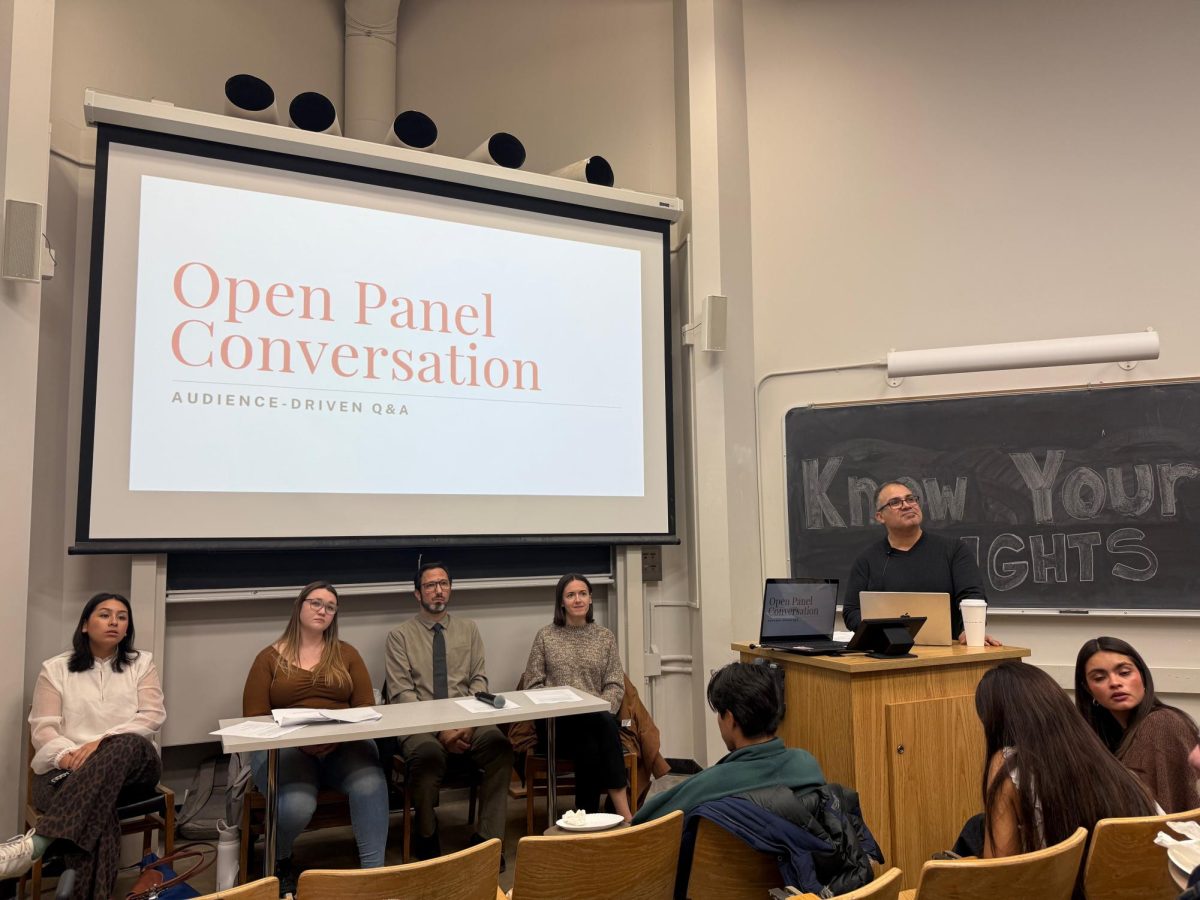

The University of Wisconsin Chapter for Voices of Courage for Equity and Social justice held a Know Your Rights panel Nov. 19 for audience members to engage in conversation and ask questions about topics in immigration, protected rights and what to do in the event of an interaction with Immigration and Customs Enforcement.
VOCES holds events across Wisconsin to provide basic educational and informational tools so individuals can protect themselves and protect those around them, according to panel moderator and UW professor Armando Ibarra.
“Every single person in this room, every single person that we interact with, has basic rights in our country, regardless of status or creation of status,” Ibarra said. “What we’re doing here, and what VOCES has done for the last several months, is to go around the state of Wisconsin and host Know Your Rights trainings.”
There is work on the UW campus to connect more with Know Your Rights, as well as creating policies to protect free speech and expression for protesters on campus, according to panelist Associated Students of Madison Vice Chair Ashley Hagen.
One student spectator said the law is often not being followed by ICE agents, and the processes for establishing whether it is being followed are often not accessible.
“Chancellor Mnookin said in a response to a question of what she would do if ICE came on campus ‘we will obey the law,’” A UW student said. “What are the ways that we can push these institutions immediately to act, before we lose due process?”
Finding and participating in student organizations on campus such as VOCES, as well as signing petitions and attending board meetings, are ways students can make their voices heard, panelist Voces de la Frontera College Organizer Melanie Leyva said in response to the students’ question.
There was a time when it was in immigrants’ best interest to cooperate with law enforcement, as they were protected under the law, but that is no longer the case, panelist Immigration Attorney Matthew Gillhouse said.
“Right now, one of the problems we have with immigration [enforcement] is they don’t have a heart or a brain,” Gillhouse said. “They’ve wasted an enormous amount of time and resources on things that don’t make sense.”
Most people have the right to defend themselves in immigration court, according to panelist Immigration Justice Corps Fellow Attorney Alayna Connolly. Even if someone is here without any status, they still have the right to defend themselves from deportation, Connolly said.
There has been a trend that many students want to be unified surrounding issues of immigration, according to Leyva. Leyva works with college students to train them in becoming verifiers — if there is an ICE sighting on campus, someone can call a hotline and a verifier will come and search the premises.
“It feels so hard to be positive right now,” Gillhouse said. “The more outspoken we are about how bad this is, the more opportunities we will have to change this.”
The hotline for potential ICE sightings and detentions can be reached at (800) 427-0213.
Additional immigrants’ rights provided by Voces de la Frontera can be viewed here.

