


Wisconsin lawmakers proposed a bill that would require governmental units and agencies to use the working definition of antisemitism from the International Holocaust Remembrance Alliance when determining discriminatory speech or actions, according to the Wisconsin Public Radio.
The official working definition of antisemitism is defined as “a certain perception of Jews, which may be expressed as hatred toward Jews. Rhetorical and physical manifestations of antisemitism are directed toward Jewish or non-Jewish individuals and/or their property, toward Jewish community institutions and religious facilities,” according to the IHRA.
The Trump administration is limiting federal funding for leading universities. As part of settlements to retain funding, many universities have instituted new policies, one of which is the adoption of the IHRA’s definition of antisemitism, according to AP News. Both Columbia University and Harvard University have put this working definition to use.
This push primarily comes from Republican congress members and pro-Israel groups in response to a wave of protests against the newly asserted genocide in Palestine across college campuses after the Oct. 7 attack by Hamas, according to the Guardian.
The definition includes examples of statements of antisemitism, including statements that focus on attitudes toward Israel specifically. One of these examples is claiming Jews are responsible for the actions of Israel, holding Israel to a double standard and denying the full identities of Jewish people, according to the IHRA.
“Contemporary examples of antisemitism … include, but are not limited to denying the Jewish people their right to self-determination by claiming that the existence of a State of Israel is a racist endeavor,” according to the IHRA.
Critics of the bill are concerned that, within the context in which it is being proposed, the definition confuses antisemitism with anti-Zionism, according to the Guardian.
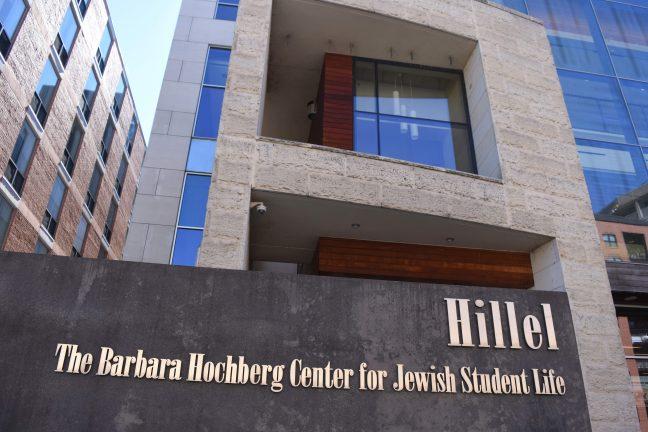
Members of the Jewish community say the bill is a response to the rising rates of antisemitic language, media and harassment, according to JNS. University of Wisconsin’s Hillel Foundation director of community relations Aaron Seligman confirmed these trends and recognized their relevance to UW’s campus.
“In the last two years, we have seen a rise, nationally and locally, in antisemitism,” Seligman said.
The bill is a response to these trends, UW professor of Jewish studies Chad Alan Goldberg said to WPR.
When asked about the bill’s potential to combat antisemitic incidents and speech, Seligman said that while it depends on the context of the situation, it could be a helpful guide.
“Having a definition of what antisemitism is can help leaders to really address it,” Seligman said.
In terms of supporting Jewish students on campus, the bill may be a way to get involved, speak out and build community, Seligman said. The Hillel Foundation is dedicated to creating welcoming spaces, fostering a sense of belonging and promoting inclusion for all, Seligman said.
Part of building a community where minority students feel safe and supported is having conversations about policies and how they affect communities on campus, Seligman said.
“I encourage students to read the bill, to get involved — we welcome that discussion,” Seligman said.
Those who opposed the bill say that genuine criticism of Israel is encompassed in the IHRA’s definition of antisemitism and could be used to censor free speech, especially at universities who fear federal funding cuts, according to the American Civil Liberties Union.
But, separating the bill from its origins — that is, the political party that proposed it — is important in order to analyze the bill and its potential impacts objectively, according to Seligman.
“I would encourage folks to get beyond the headlines and look at the text of the bill, look at the examples, look at how it’s proposed to be used because I think it’s easy to kind of reject something or favor something based on the title of it, based on who proposed it, based on what source brings it forward,” Seligman said.
The Combat Antisemitism Movement stated that after trends in previous years of rising rates of the adoption of the IHRA’s working definition of antisemitism with 97 adoptions in 2023, the rising curve has slowed, with only 34 new adoptions in 2024.
New adoptions will help to continue spreading awareness about what antisemitism looks like and how different aspects contribute to hate against Jewish people, according to the IHRA.
“Anything that can add clarity to addressing these kinds of [antisemitic] incidents is helpful,” Seligman said.
