

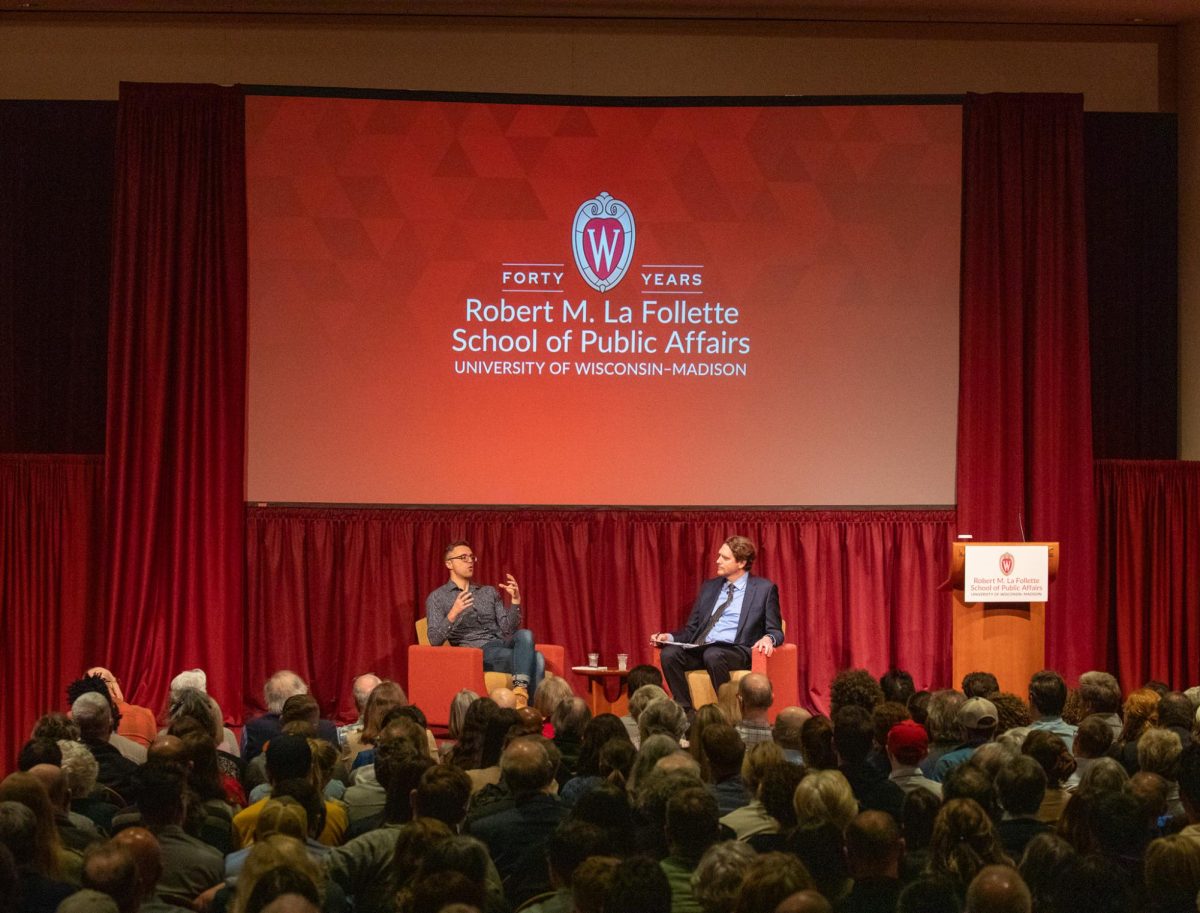

The University of Wisconsin La Follette School of Public Affairs announced it will be offering a new public policy major to undergraduate students starting fall 2026.
The introduction comes just over five years after the La Follette School began offering undergraduate courses to UW students, according to La Follette School director Susan Yackee.
“From the very start, there was tremendous undergraduate interest in the kind of classes that we teach at the La Follette School,” Yackee said. “[In] how we make public policy, kind of the politics and the process, as well as the analysis and skills-based learning approach that we use in our training programs.”
In the last year, 700 students have enrolled in the La Follette School’s public policy certificate, which it began offering at UW shortly after undergraduate classes were made available to students, Yackee said.
After asking students enrolled in the public policy certificate UW currently offers if they would prefer the option to declare as a public policy major instead, La Follette found that 70% of students said yes, according to Yackee.
“It is a competitive disadvantage right now for UW-Madison not to have an undergraduate major in public policy,” Yackee said. “Undergraduate majors in public policy at some of our peer institutions have been wildly successful.”
Developing the public policy major and getting it approved by the university took around two years in total, Yackee said. Its formation was largely inspired by student interest and the desire to meet student demand that the La Follette School faculty members were seeing, Yackee said.
Though some new majors come to the forefront due to evolving fields, Yackee said she is proud that the new public policy major grew out of student passion, and that meeting student needs should be at the helm of driving the implementation of new majors at UW.
“We did our research, and we returned with what I think is going to be a really exciting and innovative degree program,” Yackee said. “Things like evidence-based decision making, quantitative skills, communication skills around public policy, like memo writing, as well as oral presentation, those will all be there.”
La Follette School faculty members drew inspiration from current UW undergraduate and graduate majors, as well as public policy undergraduate programs at other top-20 public policy schools, while developing the new public policy major, Yackee said.
A key component in the major’s development process, though, was also ensuring that it was distinct and had something unique to offer its students from the public affairs majors already available at UW, and public policy majors at peer institutions.
“What sets it apart from all other existing majors across the country, at least, to my knowledge, is that there’s a required class in our undergraduate major in talking across the political divide,” Yackee said. “We have a [required] class in the undergraduate major called Advancing Public Policy in a divided America.”
Advancing public policy in a divided America has been an available course to all undergraduate students since fall 2025, and will continue to be available to all students after becoming a required class for public policy majors, Yackee said.
Amelia Alvarez, a junior at UW studying political science, will be pursuing a master’s degree in public affairs after graduating, at the La Follette School. Despite not yet taking the class, Alvarez said she sees the value in incorporating a course such as Advancing Public Policy in a Divided America into the public policy major.
“[Advancing public policy in a divided America] would benefit everybody to take, even if you are a nuclear engineering major,” Alvarez said. “How public policy affects many different groups of people, and how advancing public policy in a time of disarray like now, I believe everybody should understand that knowledge.”
Alvarez said she has seen many peers who were not acquainted with the ins and outs of public affairs take related courses to Advancing Public Policy in a Divided America experience a meaningful change in perspective thanks to the curriculum they were exposed to. She sees this course having a similar impact, Alvarez said.
Though it is too late in her academic career to switch her major, Alvarez said she wishes public policy had been available to her as she was starting her sophomore year.
“Public policy and political science do cross over, but having specifically a public policy degree could give you so much more specialized knowledge,” Alvarez said. “With the La Follette School being so strong, adding a major can only be beneficial.”