


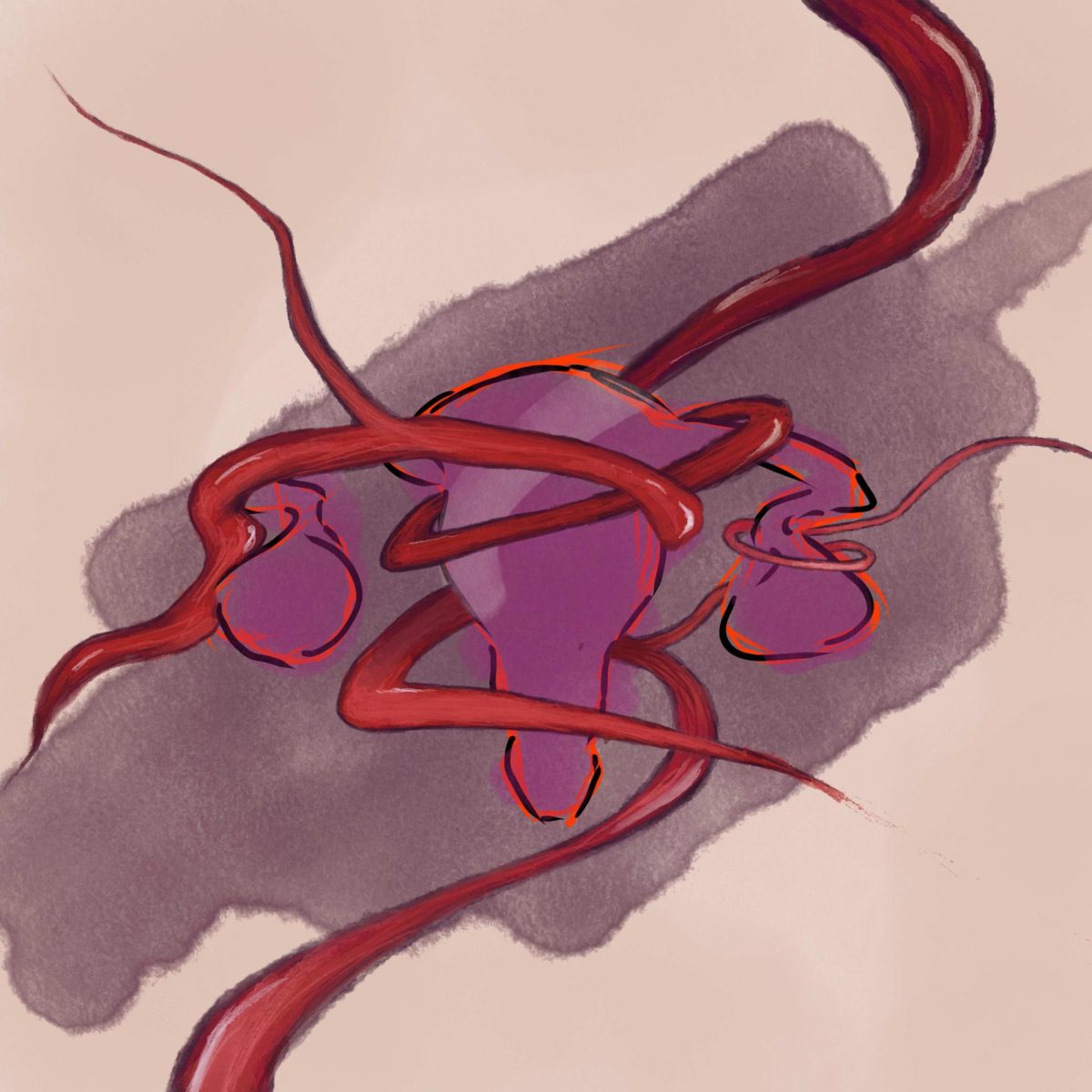

March represents endometriosis awareness month around the world — a time to educate the public, gather funding for research and wear yellow in recognition for those suffering with the disease.
Endometriosis is a condition in which a lining similar to that of the internal uterine lining grows elsewhere within the body, or ectopically, according to Dr. Bala Bhagavath, division director for Reproductive Endocrinology and Infertility within the Department of Obstetrics and Gynecology at the University of Wisconsin. This ectopic lining can be found growing on the surface of the ovaries, the tubes, the back of the uterus, the vagina, the cervix, sometimes in the lungs, under the diaphragm or in the brain, according to Bhagavath.
“In the general population, it is thought that one in six women, or 15% of women have endometriosis,” Bhagavath said.
According to the UW Office of the Registrar, there are a total of 26,968 female students at UW as of spring of 2026, so up to 4,045 students could have endometriosis.
To put it into perspective, the number of women that have been diagnosed with endometriosis worldwide is equivalent to the number of women in the U.S. and Canada combined, according to Dr. Manish Patankar, professor and researcher in the UW Department of Obstetrics and Gynecology. The number of people with endometriosis may be even higher because some people with endometriosis are asymptomatic or have not been diagnosed, according to Bhagavath.
Common symptoms of endometriosis involve pain — specifically menstrual, pelvic or abdominal — and infertility, according to Bhagavath. The disease really only manifests in women who are in their reproductive age — it’s quite rare to find endometriosis in an individual before they have reached puberty, Bhagavath said. Additionally, the disease mitigates after menopause.
Though endometriosis isn’t life threatening, the amount of pain caused by the disease immensely decreases the quality of life of the individual, according to Bhagavath.
“Some of these women are absolutely miserable and cannot really function because of the pain they suffer on a daily basis,” Bhagavath said. “It is one thing to have pain for five days, even that is bad, five days of lost productivity. But to have pain constantly, all the time, and to live in pain, is a miserable existence.”
The physical and mental toll of endometriosis can affect school work, according to Shelby Clinton, a student at the College of Charleston who has endometriosis. The pain makes walking to class difficult, and paying attention is draining, Clinton said. She frequently has to cancel plans with friends because the pain is sometimes so excruciating that she can barely move her legs.
Endometriosis is frustratingly downplayed or overlooked on social media in comparison to other chronic illnesses because it is a female reproductive disease, Clinton said. While endometriosis is common, that doesn’t diminish the severities that come with it, she said.
“It’s not just a normal bad cramp — it’s not just a normal bad period,” Clinton said. “It is genuinely debilitating some days, but because no one can see it or because you don’t have an official diagnosis, people look at you like you’re making things up.”
As far as treatment goes, medication has barriers to continued access, while surgery is a big decision with medical consequences, according to Bhagavath. Medications that are currently prescriptible are not approved for more than two years at a time, and artificial menopause from surgical removal of the uterus and ovaries is not 100% effective, Bhagavath said.
“This [artificial menopause surgery] affects women in their reproductive age, and many of them have not even started a family, let alone completed their family,” Bhagavath said. “That is a tough choice for them. Should they live in pain? Or should they get rid of that, but then also lose their ability to have a family?”
Endometriosis diagnosis can take many years, according to Bhagavath. On average, it takes 11 to 12 years to diagnose, something that will hopefully be mitigated by increased recognition of the disease, he said.
Endometriosis is currently detected and diagnosed through magnetic resonance imaging, or MRI, and ultrasound, and definitively via laparoscopic surgery, according to Bhagavath. The Patankar research team at UW is working to better understand endometriosis and to develop diagnostic tests for detection of endometriosis as well as therapies for treatment of the disease, according to Patankar.
By finding and monitoring biomarkers in the blood, the research team aims to find biomarkers that are higher or lower in endometriosis patients in comparison to a control individual with no known endometriosis, according to Patankar. This is like looking for a needle in a haystack, because there are so many other cells, proteins and other molecules in the blood to sort through to find an adequate biomarker, Patankar said. The goal of this research is to use biomarkers to detect the disease, rather than vague symptoms like pain or infertility, according to Patankar.
Because surgeries and hormonal therapies are not curative treatments for endometriosis, Patankar and Bhagavath are also exploring drugs that can kill endometriosis lesions, rather than just curb their growth.
Warning signs, such as persistent migraines and painful periods that are not cured by typical modalities such as hot water bottles and painkillers, should alert young people to have a conversation with their primary care provider about the possibility of endometriosis, according to Bhagavath. Those of college undergraduate age who are experiencing these warning signs should strongly advocate for endometriosis diagnostic testing, Bhagavath said. Being informed and direct when talking with your provider and asking for imaging or testing can decrease the length of time it takes before making the endometriosis diagnosis.
“We don’t want people to become paranoid about [endometriosis], but be informed, and if you’re truly suffering with very severe menstrual pain, or especially pain outside of menses, then I would strongly encourage people to be vocal about their own health,” Bhagavath said.
