


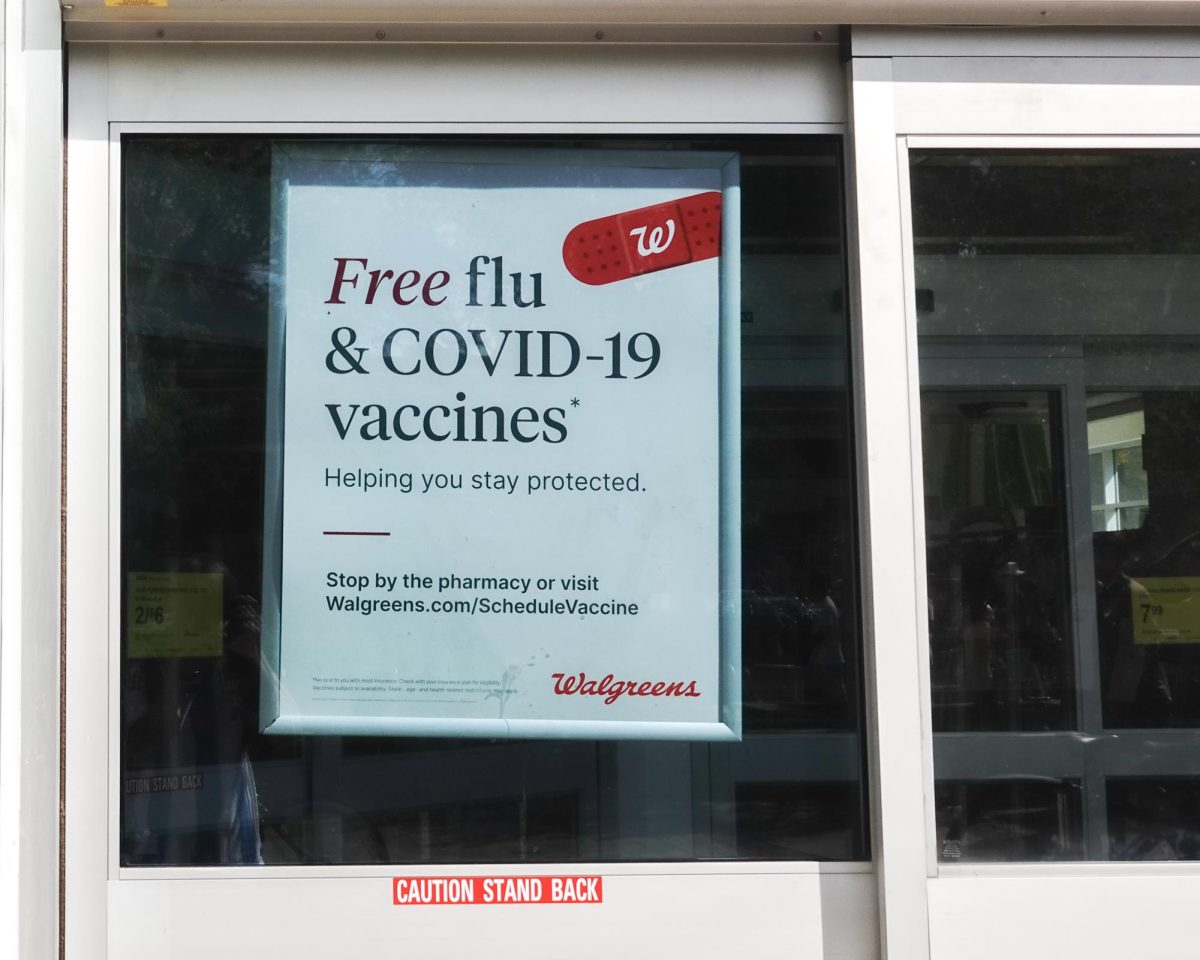

The Wisconsin Department of Health Services issued a standing medical order allowing a majority of Wisconsinites to receive the COVID-19 vaccine without a prescription, amidst pushback to vaccinations within the Trump administration, according to DHS media.
The standing medical directive follows Gov. Tony Evers executive order that calls on DHS, Office of the Commissioner of Insurance and relevant government agencies to urgently safeguard Wisconsinites’ access to vaccinations.
Wisconsin policy allows pharmacists to widely prescribe vaccines if approved by the federal government, DHS Division of Infectious Disease faculty member Dr. Ryan Westergaard said.
The Trump administration backtracked on their previous authorization of the COVID-19 vaccination, recommending the vaccine for those aged 65 years or older or those with extenuating health conditions instead, according to the order.
“The issuance of the standing order allows for pharmacists to give COVID-19 vaccines without concerns that it hasn’t been explicitly recommended by the CDC, which has been a source of uncertainty recently,” Westergaard said.
University of Wisconsin distinguished professor of pharmacy Mary Hayney said though physicians would still be able to order the COVID-19 vaccination and prescribe it to patients, the process would no longer be streamlined.
From 2024 to 2025, 90% of COVID-19 vaccines were administered by pharmacists, Hayney said.
The standing medical order is backed by professional organizations consisting of experts as well as a private initiative of scientists and physicians called the Vaccine Integrity Project, Westergaard said.
The Vaccine Integrity Project was modeled after the Advisory Committee on Immunization Practices. It reviewed the medical literature in the same manner ACIP historically has, Westergaard said.
ACIP, which is the long-standing vaccine recommendation authority, had a complete turn over of personnel due to concerns from the U.S. Secretary of Health and Human Services RFK Jr., Hayney said.
“[RFK Jr. said] it was over his concern over potential conflicts of interest of members of the state of the currently seated committee, which is absolutely not true,” Hayney said. “There is a stringent screening process for conflicts of interest for people who are appointed to the ACIP.”
RFK Jr. did not provide any reasoning for why each member of ACIP was removed, Hayney said.
Westergaard said DHS recommends receiving a COVID-19 booster every year, similar to getting a yearly influenza vaccine.
“As a rule, vaccines for respiratory viruses need boosting every year, both because the effectiveness wears off and because these viruses can change over time,” Westergaard said. “The experience from past seasons say [vaccines] should continue to work to prevent severe disease.”
The standing medical order does not address insurance coverage of the COVID-19 vaccine, Westergaard said.
OCI is responsible for directing all health insurers under its authority to cover COVID-19 vaccinations without cost sharing. It also collaborates with health insurers to guarantee customers are aware of recent information on access and cost of vaccines.
In the past, there have been federal government programs for adults and children to receive vaccines without insurance, Westergaard said.
Availability of these programs is a question as of now, and folks may have to pay out of pocket for the COVID-19 vaccine going forward, Westergaard said.
“Confusion around recommendations is a challenge for public health, and we’re trying to do our best by saying what we think is best supported by the science,” Westergaard said.
ACIP has set a meeting for Sep. 18-19 and will discuss recommendations for the COVID-19 vaccine at 8:45 a.m. Friday. It will be available to livestream on YouTube.

