


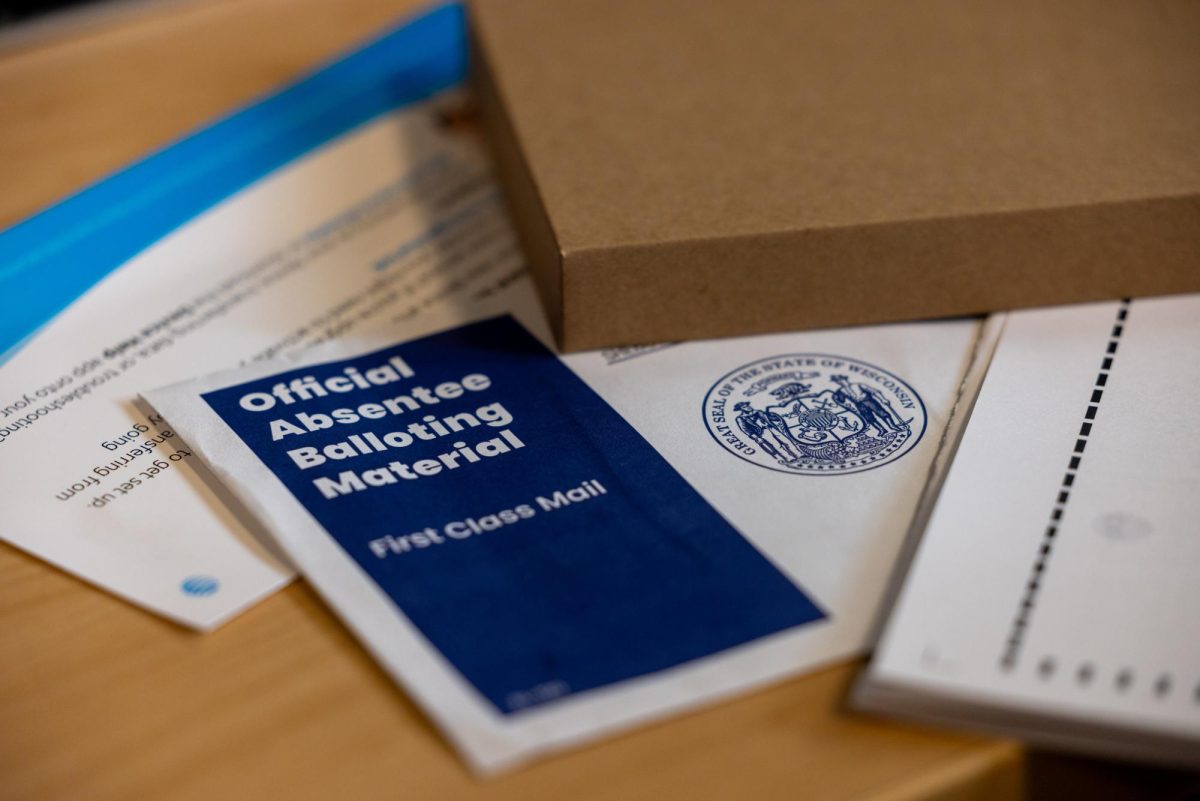

In 2024, The City of Madison failed to count 193 absentee ballots in the general election. Some of the affected voters are suing the city, according to Law Forward. The law firm has filed a lawsuit against the city on behalf of eight plaintiffs, seeking $175,000 in damages.
City Clerk at the time of the election Maribeth Witzel-Behl was made aware of the mistake in time for action to be taken, according to Law Forward. At least four of the affected voters named in the lawsuit are former or current University of Wisconsin students.
The city and its former clerk are seeking to dismiss the case by arguing that absentee voting is not a constitutional right, citing legislation that describes it as a “privilege.” Madison Mayor Satya Rhodes-Conway is defending the city’s position, citing the possible harm of financial consequences for election clerks who make these mistakes.
Rhodes-Conway stated Feb. 8 that she didn’t think the affected voters should receive financial compensation for their uncounted ballots in an interview with Channel 3000 News.
“I think what the voters deserve and what they have gotten from us is an apology and the fact that we have worked to make sure that that will never happen again,” Rhodes Conway said in the interview. “It is a terrible precedent if clerks around the state know that they can get sued and have to pay millions of dollars if they make a human error.”
Dane County Circuit Court Judge David Conway declined to dismiss the case ruling that the voters may seek monetary damages. Though absentee voting is described as a “privilege” in the U.S. Constitution, this does not mean the absentee voters were not exercising their constitutional right to vote, according to Conway.
Mayor Rhodes-Conway wrote that Madison supports Conway’s ruling and does not plan to contest it, according to a Feb. 11 op-ed, published in the Milwaukee Journal Sentinel.
Scott Thompson, lead counsel of the suit by Law Forward, said he welcomes Conway’s decision, stating that the case is about the “disenfranchisement” of the represented voters.
“This lawsuit is about making sure that our court system, the state of Wisconsin, [knows] that we really value the right to vote,” Thompson said. “Wisconsin’s Constitution has stronger protections for voters than the federal Constitution, and this is all part of that story. And so it does not matter to me, to the law, that the outcome would not have changed, really what matters here is that everyone who’s a qualified voter in Wisconsin has a stake in our democracy.”
Both Governor Tony Evers and the Wisconsin Elections Commission have filed Amicus briefs criticizing Madison’s legal argument.
Associate professor of political science at UW Howard Schweber said he finds the response to the lawsuit by the City of Madison, absolutely incomprehensible, citing that while the U.S. Constitution does not guarantee a right to vote, the Wisconsin Constitution does.
Schweber compared restrictions on absentee voting to restrictions that specify how U.S. citizens are constitutionally allowed to exercise free speech. For example, if you were to protest in public, while there may be restrictions on “how loud your amplifier can be” or “whether you block traffic,” you are still allowed to practice free expression as long as you comply with these rules, according to Schweber. Schweber sees absentee voting through the same framework.
“The argument that because absentee balloting is not a specific constitutional guarantee, it is therefore a privilege based on taking some words out of context of a particular statute is, in my mind, both legally wrong-headed and politically disastrous,” Schweber said. “Politically, if taken seriously, it would mean that Wisconsin courts could not protect the right to vote where that right was being exercised for an absentee ballot.”
City Attorney Michael Haas was appointed to temporarily serve as the Madison city clerk following the administrative leave and subsequent resignation of Witzel-Behl in March 2025, according to Wisconsin Watch. His position will be taken by new City Clerk Lydia McComas, a former voter engagement manager in Minnesota, this September.
Haas said that the lawsuit’s request for financial damages in response to a mistake by the city is a noteworthy issue for Madison and all state municipalities.
“There’s never been recognition that individual voters can bring a lawsuit to receive money for their ballot, not being counted due to an error,” Haas said. “And so municipalities would need to be aware that if that court decision is made, that they could be on the hook for mistakes that are made.”
Schweber describes that errors by election offices can result in financial damages, which could create a “perverse incentive” for election offices to restrict or do away with absentee voting altogether, according to Schweber.
This relationship between election offices and absentee voters could then become a “messy fight, ” Schwever said.
“It would then become a fight because, since there is a right to vote, you could argue that there is any constitutional met right of an adequately funded clerk’s office for the purposes of counting votes,” Schweber said. “And sometimes those fights are necessary.”
But the suit argues the City of Madison is refusing to take accountability for misconduct in the Wisconsin Clerk’s office, according to Thompson.
“I think it’s helpful to think about this in the inverse,” Thompson said. “What the city is arguing is that if someone is disenfranchised by the government, the government doesn’t owe them anything. That is the dangerous precedent.”

