


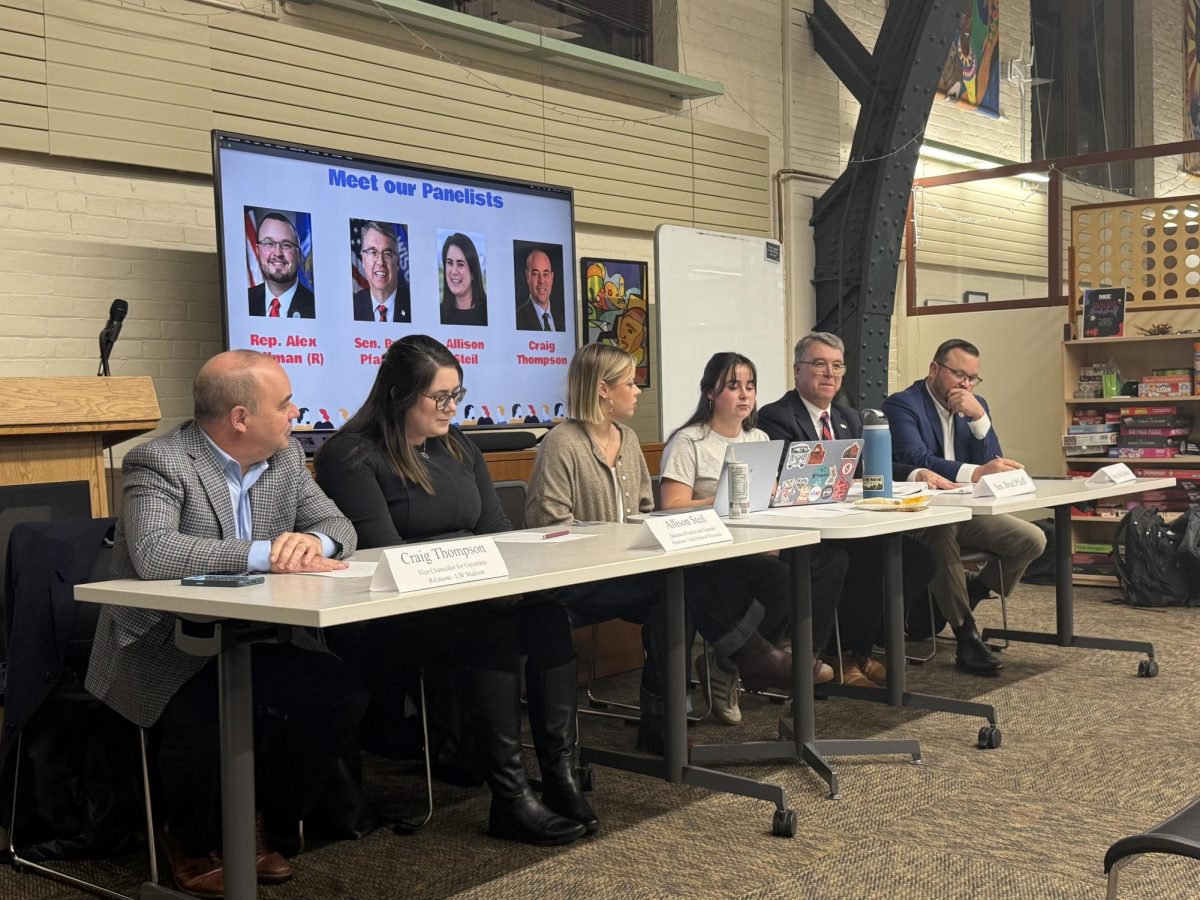

BridgeMadison hosted its second speaker series event Dec. 1. The panel included Wisconsin State Representatives from both parties, as well as University of Wisconsin faculty members.
BridgeMadison, created fall 2024, is the UW chapter of BridgeUSA, which is a nationwide student organization with a mission of encouraging students to engage in differing beliefs, experiences and perspectives, according to BridgeMadison co-Presidents Miranda Garcia-Dove and Abby Grabowski.
“Our goal is to create a space for people to show up and talk that is a structured, safe space and moderated so that disagreements can be geared towards learning instead of debate,” Grabowski said.
The event brought together dozens of audience members, including a moderated panel, Q&A opportunities for the audience and time to meet panel members. Moderators asked panel members questions about relations and communication between universities, state and federal governments.
There is a lot of importance in the relationship between higher education and the role the legislature has in it, according to panelist Wisconsin State Sen. Brad Pfaff, D-Onalaska. The UW system is the fifth largest expenditure in Wisconsin in terms of spending for higher education, according to Pfaff.
“I’m a big believer in something called the Wisconsin Idea, and that is the University of Wisconsin will go to the borders of this state,” Pfaff said. “I will continue to advocate for greater communication between the legislature and the UW and the UW system to make sure that we can build upon the Wisconsin Idea.”
There is also a significant role that the federal government has in making UW thrive, according to panelist and Vice Chancellor for University Relations Craig Thompson. Thompson said that last year, UW was sixth in the nation in the amount of federal research dollars spent.
There is a miscommunication between the general public and the university regarding where taxpayers’ dollars are being spent, panelist Wisconsin State Rep. Alex Dallman, R-Markesan, said. Constituents often raise concerns about issues happening on campus to legislators that prove to not actually be the case, according to Dallman.
“When the leaders aren’t working together good enough, it’s up to our constituents, up to our voters and up to our students to be able to get together and be able to bring those conversations forward,” Dallman said.
It is important for our students to be able to become more involved in what is happening at the state level and the federal level, according to Dallman. Conversation about educational systems often stops once it leaves Capitol Hill, Dallman said.
It is important that universities, including Madison, bring in diverse speakers and leaders and have students attend speeches and events, even if they do not agree with guests, according to Universities of Wisconsin Director of Federal and Corporate Relations Allison Steil.
“I think events like this are fantastic, and events that I hope continue,” Steil said. “Bringing people of diverse thoughts and backgrounds together to have conversations on whatever the issue may be is a wonderful way to further everyone’s knowledge and find areas of common agreement.”
Being exposed to diversity of thought is what makes attending a university like UW valuable, and it will be beneficial to students as they graduate and pursue careers, according to Steil.

