


In an online presentation Nov. 17, associate professor at the School of Middle Eastern and North African Studies at the University of Arizona Maha Nassar presented a history of Palestinian student activism and how students have used peaceful protest for change.
Nassar teaches courses on Palestinian history and navigating the modern Arab world, according to UW’s Middle East Studies Program.
“I have found that focusing on the Palestinian condition, and Palestinian experiences, and Palestinian perspectives and Palestinian hope has been an effective way to reach a larger audience,” Nassar said.
Palestinian activism has faced a long history of suppression, not all of which is fully in the past, Nassar said.
In 1923, the American University of Beirut in Lebanon announced a cultural heritage night, inviting the university’s diverse student body to display symbols of their cultural pride. The term “cultural pride” would be the cause of much discussion at AUB, according to Nassar.
“At a time when Orientalist depictions of Arab backwardness were deployed to justify colonial oppression, where did cultural pride end, and where did political demands begin?” Nassar said.
A student organization carrying zionist beliefs asked to join this heritage night bearing the Star of David, which university administrators deemed a cultural symbol. But, a Palestinian student organization requested to display a banner carrying a crescent with a cross inside it as a symbol of Arab cultural revival and was denied by administration, who claimed it was a political symbol, Nassar said.
The students faced a threat of expulsion and deportation, but continued on, creating a student publication to continue to fight for political and national liberation, according to Nassar.
The legacy of these students inspired more like them, such as Hala Sakakini. Sakakini was born into a Palestinian Christian family in 1924. She enrolled into AUB in 1942, a time of great strife as World War II raged. She joined her fellow students in walking out of AUB’s main gate carrying signs that called for national independence, Nassar said.
After World War II, student activism reached new heights of participation, with tens of thousands of Palestinian students taking part in the May Day strikes against the Vietnam War, Nassar said.
Further, students in the 21st century, following in the footsteps of those before them, responded with action, Nassar said.
“In 2023-24, as students witnessed a genocide unfolding in Gaza, as they saw stomach-churning images of maned and charred Palestinian bodies, students around the world responded with the vigor and urgency that the moment deserved,” Nassar said.
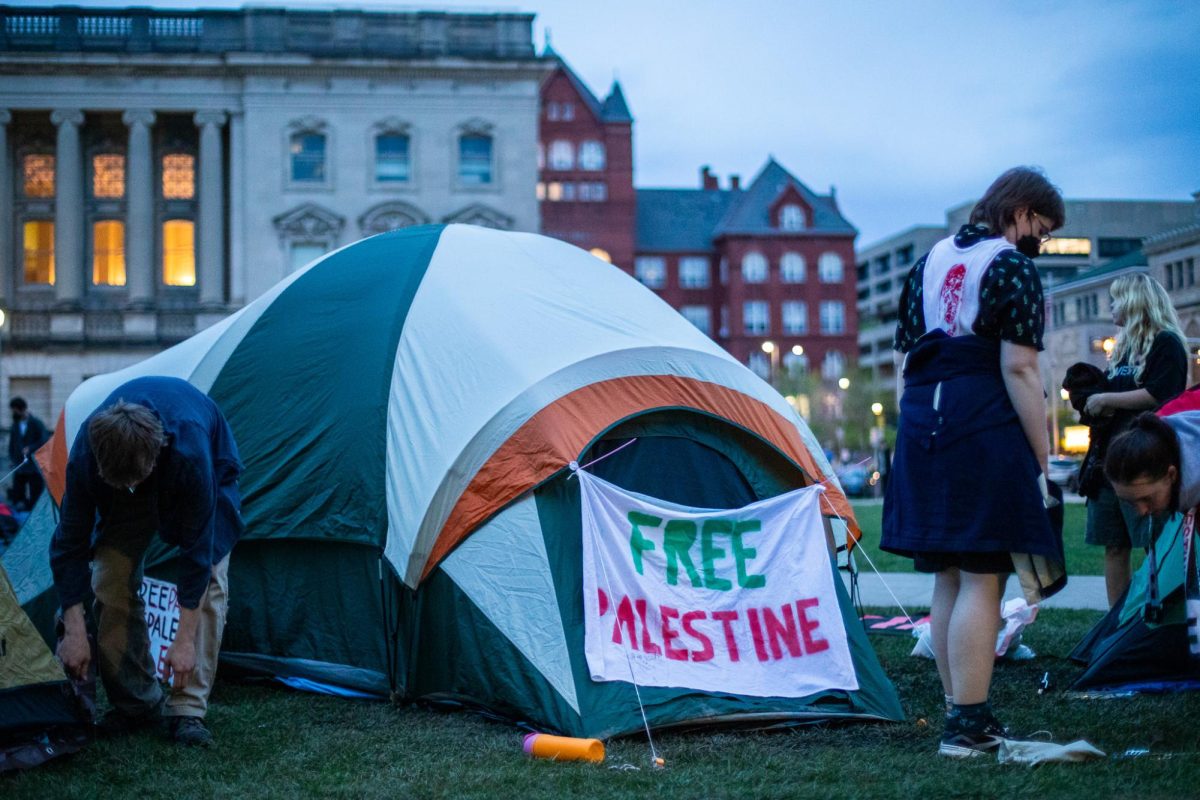
These students’ responses took the shapes of organized protests, teach-ins and encampments challenging western narratives that dismissed the Palestinian struggle for freedom, according to Nassar.
In conclusion with the presentation, participants asked Nassar about the impact of underground institutions, the intersection of peaceful resistance and institutional pushback and how refugee camps exemplify the concept of sumud.
Palestinian activism is based on the concept of sumud, according to Nassar. Sumud is used to describe the everyday, silent resistance from Palestinians against the Israeli occupation of Palestine, according to the Interactive Encyclopedia of the Palestine Question.
Palestinian resistance lives on because of how it interacts with Western viewpoints and actions, Nassar said.
“I think Palestine resonates with so many students in the United States and around the world because it symbolizes the unfinished business of rectifying the harms of Western extraction, colonialism and exploitation,” Nassar said.