



Editor’s note: These Q&As are lightly edited for clarity and style.
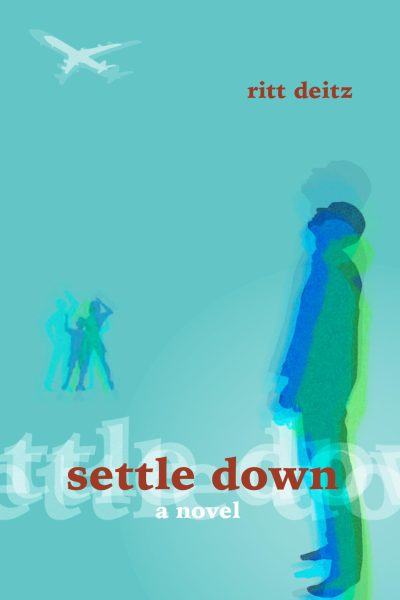
Ritt Deitz has long balanced two creative callings: teaching French at the University of Wisconsin for 25 years and writing songs that span 10 albums. Deitz adds long-form fiction writing to the list of creative endeavors with his debut novel, “Settle Down,” which follows college student and Madison native Kenny McLuher as he navigates post-grad plans and considers the question of what “home” really means. In this Q&A, edited and cut for clarity, Deitz reflects on the intersections of music, teaching and writing, and what it truly means to “settle down.”
Could you give me a quick rundown of your career — how long you’ve been involved in teaching and music, and how those have worked in tandem?
Music and teaching have indeed worked in tandem. That’s a good way to put it. When I was in college, I was playing in bands all the time, and I was just good at French. So finally, my advisor called me in and said, “Look, you have to declare a major. You’re in your third year. So, what do you like?” I’m like “Well, I’m really good at French, and I’m playing a lot of music. I don’t want to pursue music.” I don’t study music. I’m a functional illiterate when it comes to music. I’ve made 10 albums, but I don’t really read music.
So, I moved to Madison, actually, with a band. After a year, I’d become a state resident, and I went to graduate school here. I applied to graduate school at UW, and I got in. I learned how to teach, and it was pretty innate. It felt really good. I was raised around language, by language-obsessed people, and I think that’s why I got really good at French, really early.
I’ve always been a storyteller. I come from storytellers. I see what I do as teaching about storytelling or teaching people to be storytellers.
So, the book, as I was writing it … reminded me that I’m telling a longer form folk song.
Would you say that your writing processes are similar between songwriting and writing for a novel?
I think with fiction, one of the big differences is, I can’t get super trippy, because the reader needs more concrete…
Direction?
Yeah. I’m a little bit more realistic. Except, dreaming and hypnosis are in this story.
Yeah, tell me about that.
I always knew that I dream very, very vividly, and my family has a tradition of sharing our dreams a lot.
Also, I got to be pretty into my middle age before I lost anybody really close to me, and then I lost a couple of people once I hit my 30s and 40s. I lost a very close grandpa, and I lost my dad, and I was close to both of them … they visit you in your dream. They’re so vivid that it feels like a parallel world where you can visit people who you knew before … I think that [vivid dreaming] drew my attention a little bit more to the very concrete parallels between the dream world and the real world.
The main character struggles with this uncertainty about life after graduation. Do you see parallels to that with your students?
I think people sometimes think if you go to a place and commit to that place that you sort of settled. I mean, there’s the joke of the title. One of them is that “settle down” is an active verb. It’s not sighing and giving up and being like, “Okay, I don’t have anything else to do.” That’s not what I mean by “settle down” at all.
What do you hope readers, especially young adults, take away from “Settle Down”?
The people around you are really important. The place you’re from is really important, wherever you end up going … And it’s probably gonna work out.
Deitz will be interviewed live by Madison columnist Doug Moe at Mystery to Me books Oct. 1 at 6 p.m. Admission is free.