


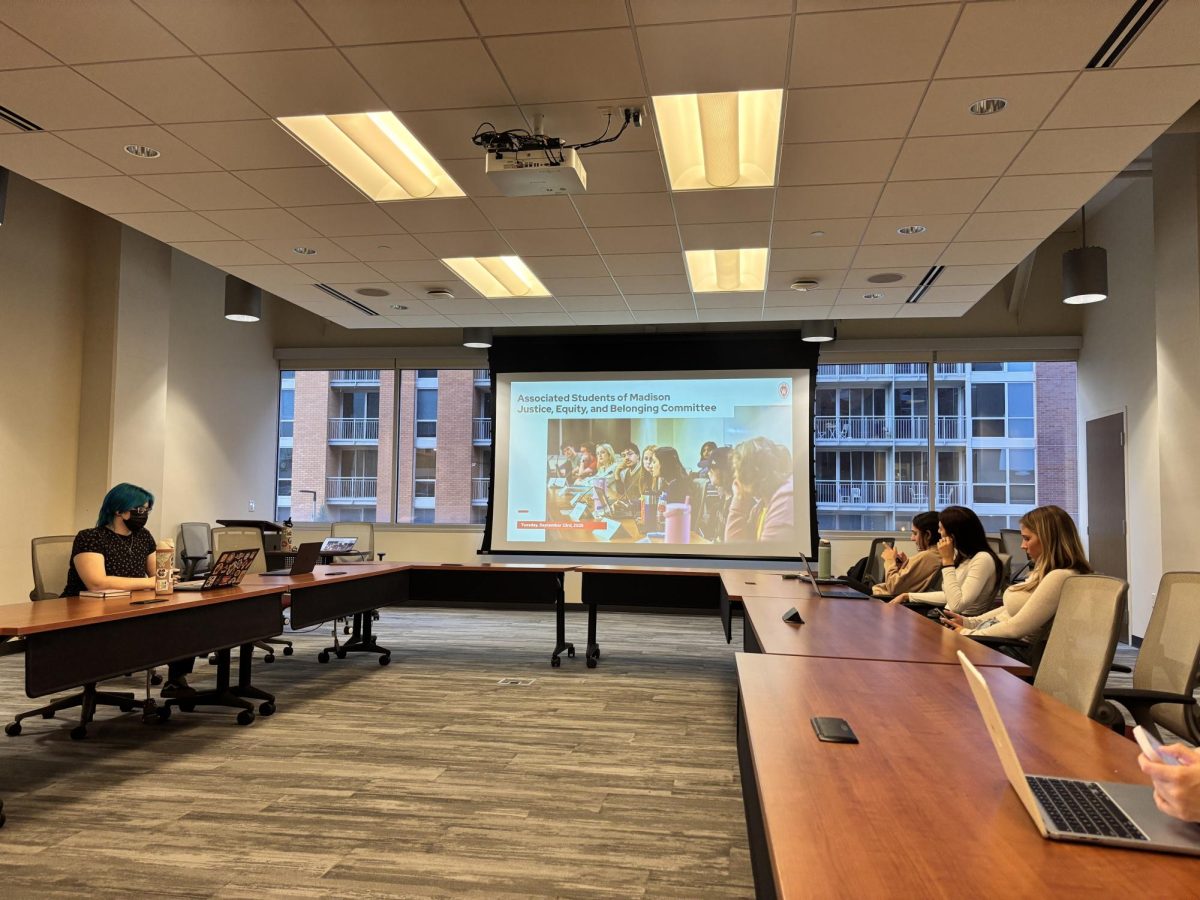

The Associated Students of Madison Justice Equity and Belonging Committee held their first meeting on Tuesday, Sept. 23, to discuss the reorientation of University of Wisconsin’s approach to diversity and inclusion measures.
The meeting comes after JEB released a Call to Action statement addressed to UW students to foster and uplift equity based coalitions on campus in the face of the sunsetting of UW Division of Diversity, Equity and Educational Achievement.
JEB is one of the four open committees a part of ASM, which is the shared student governance body at UW.
Equity and Inclusion Chair Camren Livermore, Antiviolence Chair Jake Wesson and ASM Chair Landis Varughese led a freeform discussion structured around an overview of the dissolution of the DDEEA to a group of students ranging from undergraduates to PhD candidates.
UW is expanding the definition of Diversity, Equity and Inclusion in the wake of federal scrutiny and funding cut threats based on a university’s purported values, Wesson said.
The Identity Inclusion segment of DDEEA was renamed to Student Success and Belonging this past summer to reflect this shift in government sentiment towards DEI and identity focused support systems, Livermore said.
“[This] definitely has the potential to send messaging to marginalized students that their identity is not a priority here,” Livermore said. “I think that’s kind of the antithesis of student success and belonging.”
ASM already expressed concerns to the UW administration in the previous session over reassignments and restructuring in the multicultural centers on campus, Livermore said.
These concerns are now coming to light in the multicultural centers and LGBT Campus Center, Livermore said.
Moving forward, UW employees such as a Black Cultural Center program coordinator would be designated as a general Student Success and Belonging program coordinator, Livermore said.
“The big thing we want to bring up to the committee is how we can make sure that students are in touch with these changes as they’re happening, and that student voices are being represented in this ongoing restructuring of cultural centers,” Livermore said.
Historically, registered student organizations affiliated with campus cultural centers have secured funding via DDEEA channels due to limited cultural center funding, Livermore said.
The dissolution of DDEEA in addition to overall budget cuts may complicate the ability of these RSO’s to secure funding, Livermore said.
Varughese outlined his idea to execute a widespread campaign to advertise ASM’s Grant Allocation Committee to multicultural centers and all campus organizations.
GAC is responsible for distributing over $300 thousand to RSO’s annually, Varughese said.
ASM has had difficulty entering the UW student consciousness and struggled to convey what they offer to students at UW for an extended period of time, Varughese and discussion members said.
By launching a heavy hitting advertising campaign, Varughese hopes to give organizations who face funding cuts an opportunity to apply for grants via GAC.
“[ASM does] have a really, really powerful system here at Madison to have conversations with administrators and get students in the rooms where major decisions are being made,” Livermore said.
Open committee meetings are open for all UW students to attend, according to the ASM website.

