


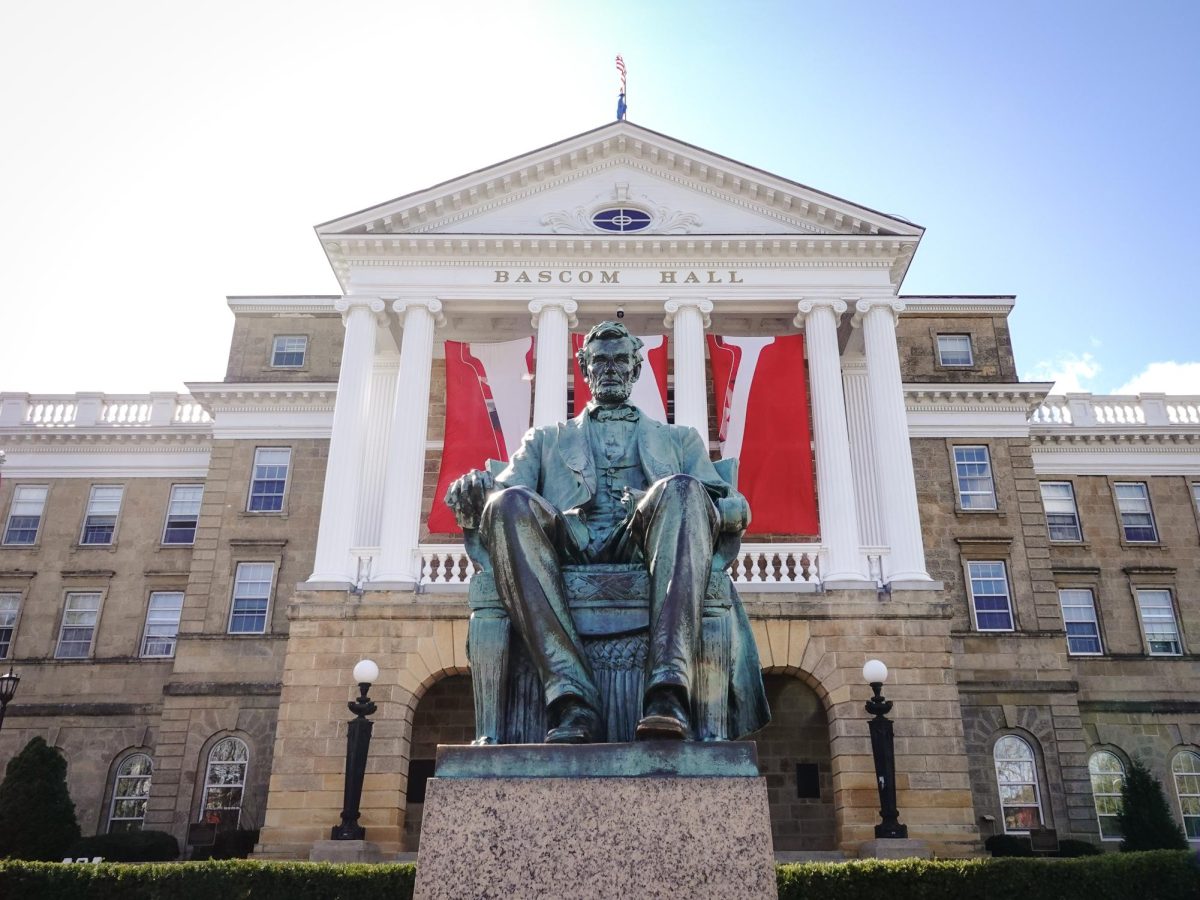

The Wisconsin Alumni Foundation and Alumni Association hosted a virtual discussion, “What’s at Stake with Federal Funding for UW Research,” April 15. Wisconsin Foundation and Alumni Association senior adviser Mike Knetter moderated the talk.
Vice Chancellor for Research Dorota Grejner-Brzezinska began the discussion focusing on the University of Wisconsin’s research achievements.
“We are producing phenomenal graduates who are going to take jobs in Wisconsin and across the nation and across the world,” Grejner-Brzezinska said.
UW and UW-related startup companies contribute $30.8 billion to Wisconsin’s economy, producing $1 billion in state and local taxes per year and supporting more than 232,000 jobs, according to Grejner-Brzezinska.
40% of basic or fundamental research in this country is sponsored by industries, the rest being funded by federal government fundings, according to Grejner-Brzezinska.
“So even though industry sponsors so much, it doesn’t really replace the federal funding,” Grejner-Brzezinska said. “So we really need to be mindful of this, that the only source for us to really develop across the board of basic sciences is really through the federal government.”
The cost of federally sponsored research sprouts from Facility Needs Assessments or indirect costs. Then there are direct costs, which cover the individual costs of students, lab supplies and other associated costs which are not covered by federal fundings, according to Grejner-Brzezinska.
Every university has a specific rate of FNA and UW has 55.5%, Grejner-Brzezinska said.
The federal government selects the number, and the university is then allowed to charge the government up to this level of FNA, Grejner-Brzezinska said.
The 55.5% is composed of two numbers — 26.5% is the fixed rate for administrative costs, which hasn’t changed over the last 25 years, though federal regulation has significantly increased, according to Grejner-Brzezinska.
“So I just want to put this in perspective again, this is not a gift to the university,” Grejner-Brzezinska said. “This is the real cost, which we need to recover.”
Department of Biomolecular Chemistry Professor Anjon Audhya switched the discussion focus to the School of Medicine and Public Health’s impacts from federal funding cuts.
The School of Medicine and Public Health received, in previous years, approximately $30 million worth of research funding, Audhya said. In total, expenditures are over $1 billion, and more than 50% of expenditures come from federal funds.
“Our researchers that we recruit to the School of Medicine and Public Health really rely heavily on the investment the federal government makes in the research enterprise,” Audyha said. “This is true of every single academic institution that’s really leading a strong research project.”
One major area of research in the UW School of Medicine and Public Health is clinical trials to improve cancer and dementia care, according to Audhya. In order to conduct the safest and most effective clinical trials for today’s research, federal funds are essential in order to cover the direct costs.
Associate director of the Wisconsin Alzheimer’s Institute, Sterling Johnson, said two FDA-approved therapies remove amyloid plaques, one of the major contributors to Alzheimer’s disease.
“One of these studies was NIH funded, and it showed that the long-term therapy with one of these experimental drugs reduced the risk of converting to symptoms by over 50%, and this is extraordinary,” Johnson said. “There’s other large prevention studies underway, many of which are NIH funded.”
Though the majority of the NIH Alzheimer’s portfolio is intact, there are institutions beginning to lose NIH grants in the field of Alzheimer’s disease, Johnson said.
“The NIH funding is funding drug discovery, and they’re funding more basic science,” Johnson said. “So this is all happening with NIH funding, it’s this work that industry could not do and really could not support the kind of portfolio that’s needed to respond to this need.”
The Wisconsin Alumni Foundation and Alumni Association will be hosting another program, topic yet to be determined, in the middle of May and encourages listeners to stay updated through their website.

